
Last updated November 15, 2026
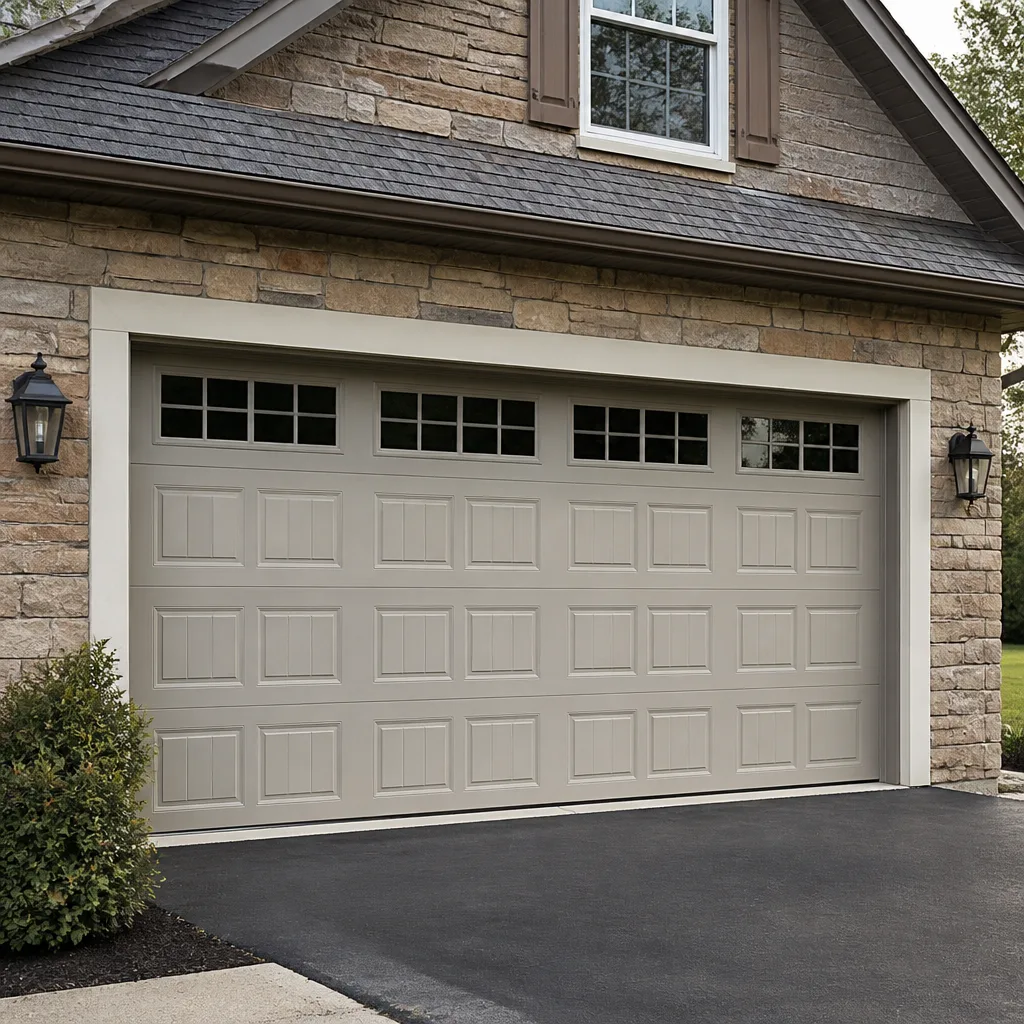 Raised-panel steel
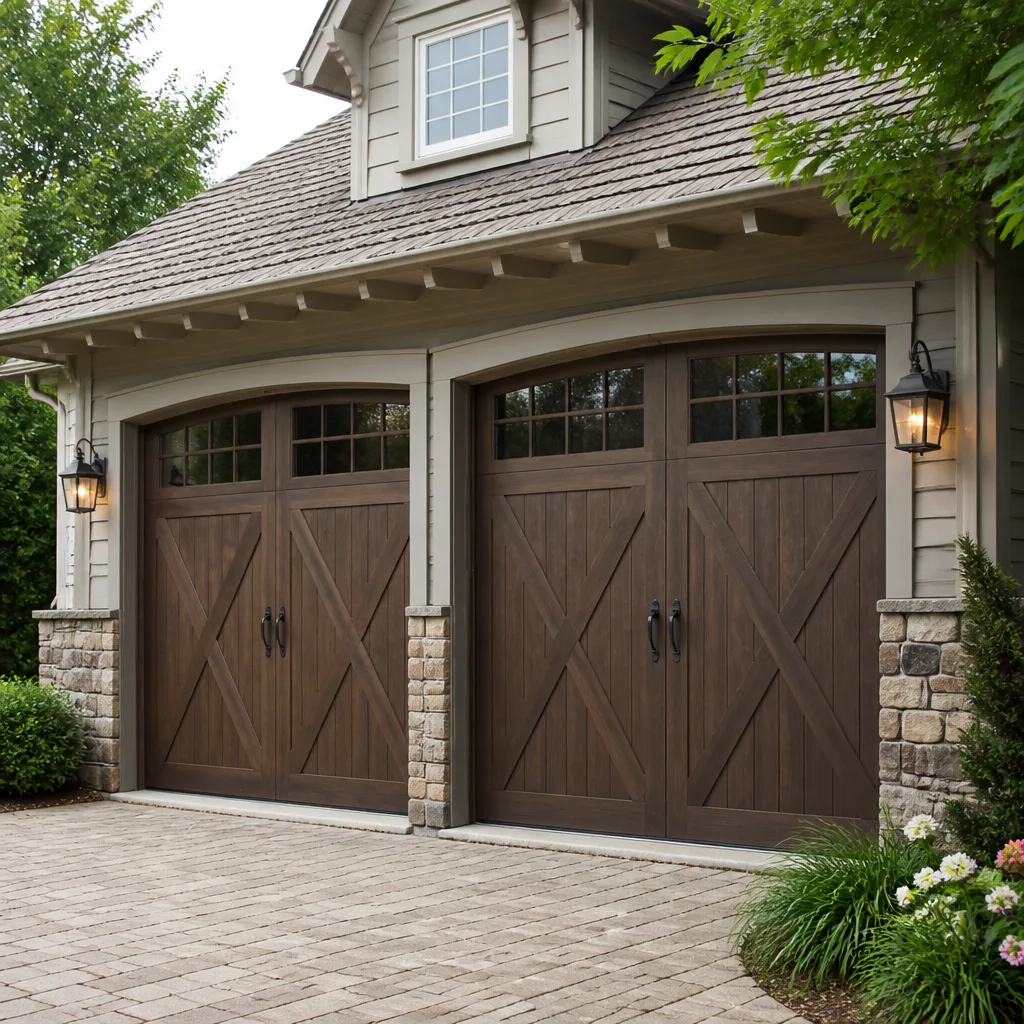 Carriage house
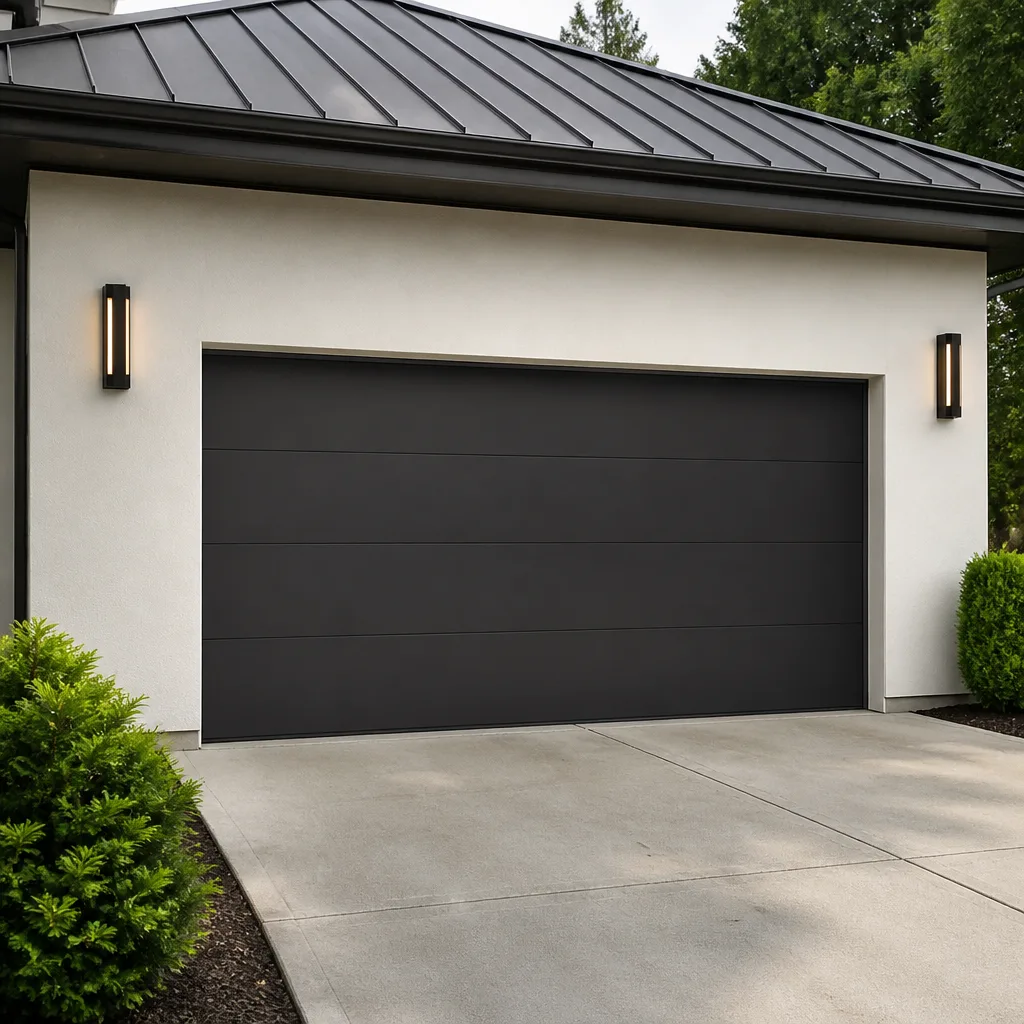 Modern flush
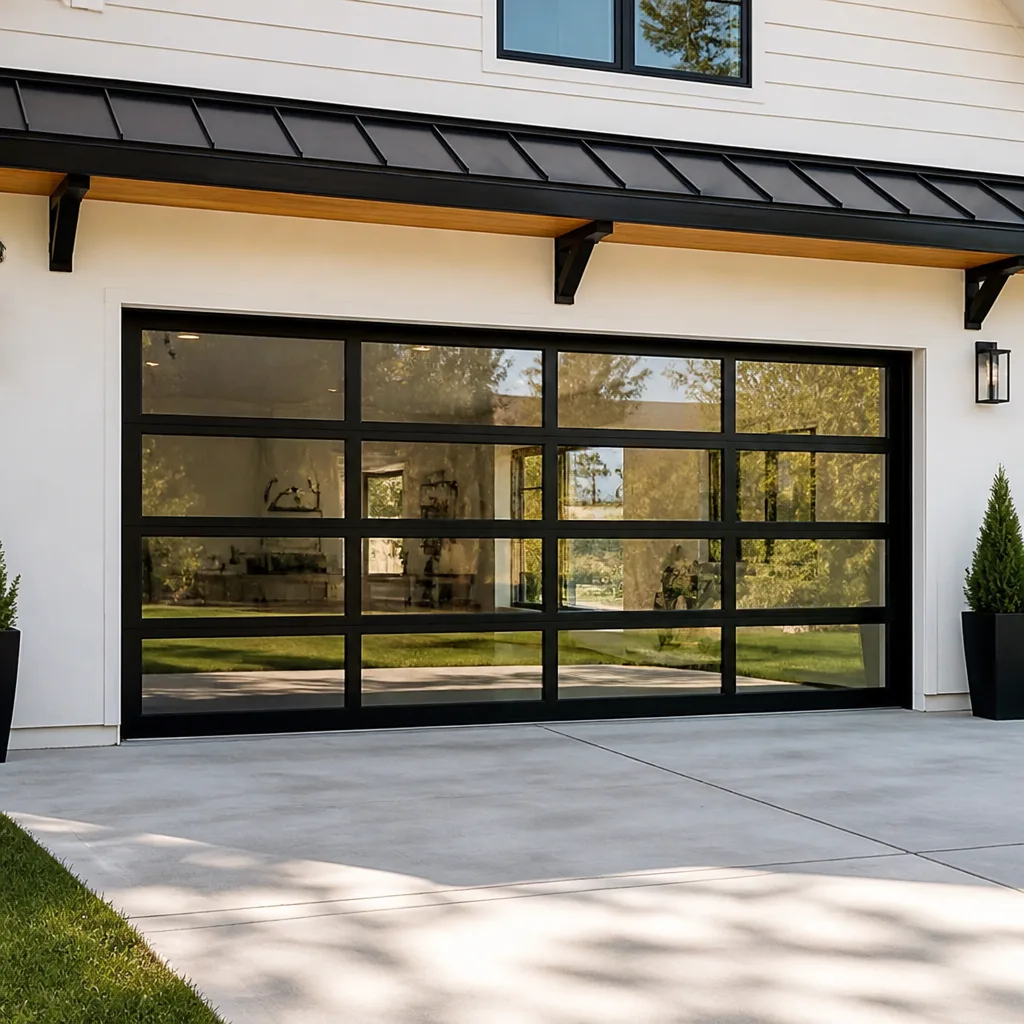 Full-view glass
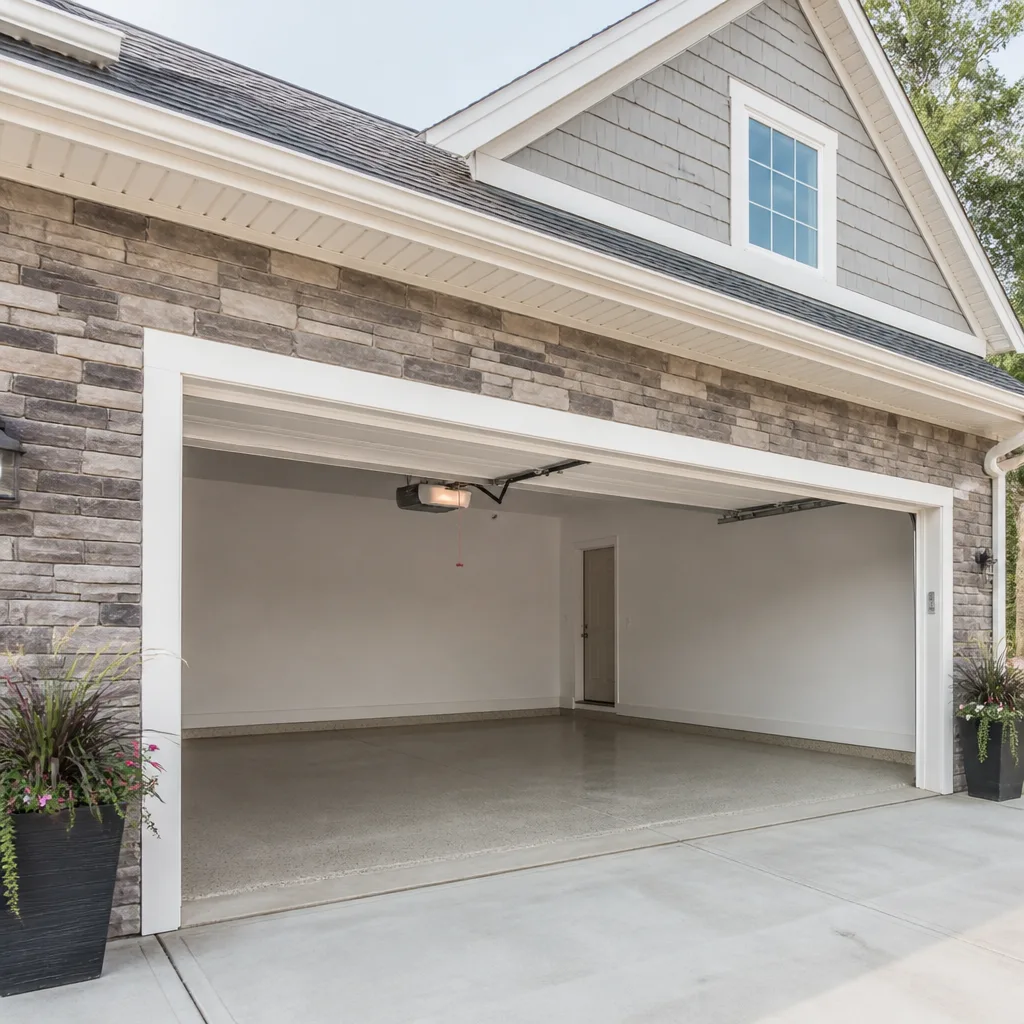 LiftMaster openers
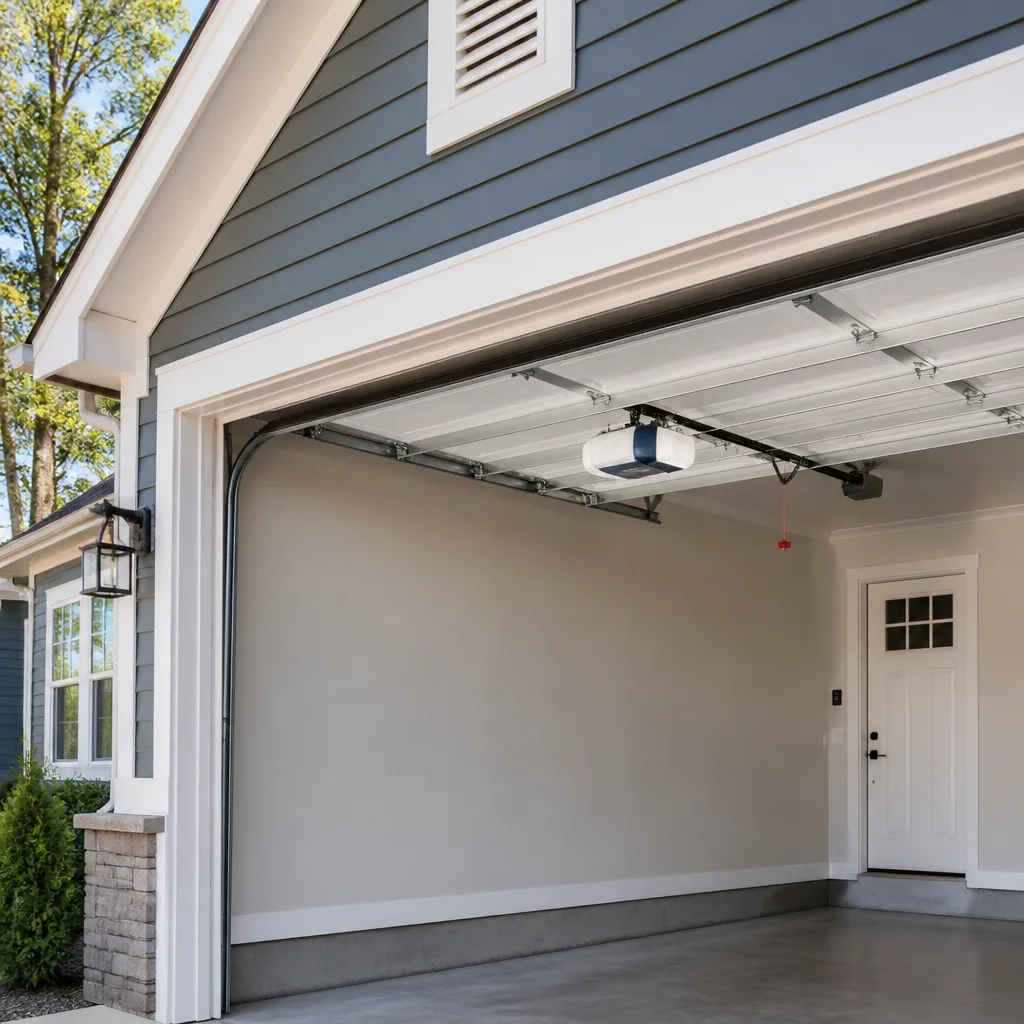 Chamberlain openers
Full 25-point door and opener safety check with every visit - springs, cables, rollers, tracks, and your LiftMaster or Chamberlain opener included
You get a price before we start. It does not change when the pro arrives.
Get your free estimateGarage Door Repair Troubleshooting in Greensboro: Common Problems and How to Fix Them
A door that reverses before it touches the floor and a door that won’t move at all look like the same emergency from the driveway. They aren’t. One is usually a safety-sensor or opener-logic problem. The other is almost always mechanical: a spring, a cable, a rolled track. Confusing the two is the single most common reason a homeowner makes a small problem worse before anyone qualified gets eyes on it. This guide teaches you to read your door’s behavior the way a technician does, so you can tell which of four systems is talking to you. You’ll learn the safe tests to run yourself, the symptoms that point to Greensboro’s humidity rather than your opener, and the exact moments to stop and call someone.
Quick Answer
Most garage door problems trace back to one of four systems: the torsion or extension springs, the lift cables, the track and rollers, or the opener itself. Match the symptom to the system first – a door that reverses stays in the opener or sensor category, a door that won’t lift stays in the spring category, and grinding or jerking points to track and rollers. Reading that map before you touch anything saves time and prevents the frustrated adjustment that turns a worn roller into a bent panel.
Styles & brands we work with
- Raised-panel steel
- Carriage house
- Modern flush
- Full-view glass
- LiftMaster openers
- Chamberlain openers
Table of Contents
- The Symptom-to-System Map: Reading Your Door Like a Technician
- Why Greensboro Humidity Makes Your Opener Look Guilty
- Three Safe Tests Before You Touch Anything
- The Two-Inch Gap That Signals a Track Problem
- Loud Pops, Grinding, and Squealing: What the Noise Is Telling You
- When the Problem Is Opener Logic, Not the Door
- The Stop Points: Signs You’ve Reached Torsion Spring Territory
- What Repair Usually Costs in Greensboro
The Symptom-to-System Map: Reading Your Door Like a Technician
A garage door is a weighted platform, not a machine. The panels, hinges, and rollers just hang on the frame and follow it. Movement comes from the springs and cables. Push comes from the opener. Four systems, and every symptom belongs to one of them.
Here’s the map a technician runs in their head before opening a toolbox:
- Slow close, or closes at normal speed but feels heavy: spring tension is fading or the torsion spring has snapped. The opener is doing work the spring used to do.
- Loud pop, then the door won’t lift: almost always a broken torsion spring. The pop is the spring letting go; the dead door is the result.
- Partial lift, then it stalls midway: cable off its drum, a snapped cable, or a bound roller. The opener is lifting against friction it can’t overcome.
- Dead stop: opener runs, door doesn’t move: opener drive problem (gear, chain, or belt) or the manual release is engaged.
- Reverses just above the floor: photo-eye alignment or logic board. Not the door.
In our experience across Greensboro, homeowners misdiagnose by treating the opener as the default suspect. They hear the motor run and assume it failed. More often the opener is fine and the door has become too heavy for it to lift – a spring problem wearing an opener-shaped mask. A brand-agnostic technician working on a garage door repair call reads the door’s weight and resistance before touching the motor. That’s why a diagnosis is faster than a guess.
Why Greensboro Humidity Makes Your Opener Look Guilty
Greensboro runs humid in summer and swings cooler and drier in fall. That moisture cycle does two things to a garage door that a homeowner rarely connects to opener trouble.
Wood doors swell. Even painted wood absorbs some humidity along the bottom rail and end stiles, and a door that fit smoothly in spring can start scraping the jamb by late July. The opener has to push through that friction, so it seems weak. It isn’t. Run your hand along the door edges in a humid stretch and you can often feel where it’s binding against the frame. Aluminum and steel doors behave differently: the metal track expands and contracts with temperature, and a track that was snug when it was cool can bow slightly by afternoon, pinching rollers in the curve. That shows up as a door that jerks or binds in one spot and runs smooth everywhere else.
Humidity also affects seals. A rubber bottom seal that took a set when it was cold can leave a gap after the door settles. On a Greensboro door with a client, that gap is sometimes weatherstripping and sometimes track. Here’s how to tell: look at the two ends. If the gap is even across the width and the door sits level at both ends, it’s the seal. If the gap is wider on one side and the door tilts, the track or the torsion bar is out of level and the symptom will worsen under load.
Track that’s out of level doesn’t fix itself with humidity. It’s worth having a technician check the track before the binding begins wearing the rollers or warping the door’s bottom section.
Three Safe Tests Before You Touch Anything
You can learn a lot about your door without turning a wrench. These three tests tell you what kind of problem you’re in without getting your hands near the springs. They’re safe because they don’t require you to load the door yourself.
- The disconnect test. Pull the manual release cord (the red handle hanging from the opener rail) and lift the door by hand. It should move smoothly with light effort, and it should stop and stay wherever you leave it. If it’s heavy or slams down, the springs are not doing their job. If it binds at one point, the track or a roller is the problem. Reattach the release when you’re done.
- The balance test. With the door disconnected, lift it by hand to roughly halfway and let go. A properly balanced door stays put, maybe drifts a little. A door that falls means the springs are under-tensioned. A door that rises on its own is over-tensioned. Both are adjustments for a technician, not a homeowner.
- The visual cable check. Look at the cables running down each side of the door. They should be taut and sitting cleanly in their drums at the top. A cable that’s slack, frayed, or has popped off the drum is a stop sign. Don’t try to re-seat it. That cable is under enough tension to do real damage to a hand or an arm.
If all three tests pass but the door still misbehaves, you’re most likely looking at the opener or the sensors. That shifts the diagnosis to electronics and away from mechanics, which is a very different repair. If the tests fail, don’t push the door up and down to see if it fixes itself – that loads a spring that may already be compromised.
The Two-Inch Gap That Signals a Track Problem
A gap at the bottom of the door looks like a seal issue, and sometimes it is. But a gap that shows up suddenly, or one that grows, is almost always a track that’s been pushed out of alignment. The door rides the track, and when the vertical track on one side leans even slightly, the door no longer sits square to the floor. The corner over the leaning track lifts, and you see daylight.
Why it worsens under load: every time the door opens and closes, the rollers press harder against the misaligned track. The track bends a little more. The rollers wear unevenly. Within weeks the gap is bigger than it was, and the door starts to bind in the curve where the vertical track meets the horizontal. Left long enough, the bottom panel takes the stress and starts to warp.
Before you blame the track, rule out the simple stuff. Check that nothing is sitting in the path of the door – a rake, a bike wheel, even a small stone – because a door that stops short of the floor on one side because of a blocker looks identical to a gap. Check the bottom seal for compression. Then look at the two ends from inside the garage with the door closed. If one corner sits lower than the other, the problem is structural and calls for a technician. If both corners are level and the gap is uniform, the seal or the door’s threshold is the issue, and that’s a much smaller fix.
Loud Pops, Grinding, and Squealing: What the Noise Is Telling You
Noise is the most useful diagnostic tool you have, because different systems fail with distinct sounds.
A single loud pop, followed by a door that won’t lift: a torsion spring has broken. This is the most common spring failure. It happens fast and without warning, and it sounds like a firecracker or a heavy book slammed on a table. The door might rise an inch and stop, or not move at all if the opener’s safety has already kicked in. This is a full stop. Don’t try to open the door, and don’t run the opener again.
Grinding or scraping: metal on metal. That’s the rollers against the track, or the track itself against the door edge. Often a sign of worn rollers or a slightly bent track. Not immediately dangerous, but it wears parts and gets louder.
Squealing or high-pitched whine: dry hinges, dry rollers, or a worn opener gear. If it’s coming from the opener itself, the gear or belt is the cause. If it’s coming from the door, lubrication is the first place to look.
Rattling: loose hardware – bolts on the hinges, the bracket that holds the opener rail, or the top panel. Usually minor and easy to tighten, but it tells you the door’s fasteners have loosened over time.
Rumbling that feels like it comes through the ceiling: opener motor or rail vibration. On a LiftMaster or Chamberlain opener, this is often a loose rail bolt or worn isolators. On a Craftsman or Genie system, it can be the chain or belt tension. Brand-agnostic diagnosis matters here, because the fix differs by manufacturer. A technician working across eight brands knows which tightening pattern applies to your opener before starting.
When the Problem Is Opener Logic, Not the Door
Sometimes the door is fine, the springs are fine, and something in the opener’s head has decided to misbehave. You can usually tell because the door behaves normally when disconnected and lifted by hand, but reverses, stops, or refuses to respond when the opener is in control.
Common opener-logic symptoms:
- Reverses immediately on close: photo-eye sensors are misaligned, dusty, wired wrong, or blocked by something in the path (a broom, a snow shovel handle, a garbage can set too close).
- Stops partway and reverses: the travel limits have drifted, or the opener thinks it has hit an obstruction. On smart openers, an app update can occasionally reset limits – LiftMaster and Chamberlain systems are usually the least fussy here, but it does happen.
- Opener runs but the door doesn’t move: the manual release may have been left engaged (check the red cord), or the drive gear has stripped. Stripped gears are common on older Craftsman and Genie openers and often sound like a motor spinning freely with a light clicking.
- Remote works intermittently: battery, antenna wire, or interference. Try a fresh battery before assuming the opener is failing.
Opener logic problems are tempting to solve yourself because they feel electronic rather than mechanical. Caution is warranted: opener wiring is line voltage for the motor and low voltage for the sensors, and mixing the two is a real hazard. If the problem is can’t-be-bothered sensor alignment or a battery, that’s homeowner territory. Anything past that belongs in a technician’s hands. Our garage door opener repair calls start with a sensor and logic check precisely because that step rules out a mechanical repair most of the time.
The Stop Points: Signs You’ve Reached Torsion Spring Territory
This is the line. On one side, a homeowner can safely tighten a bolt, replace a battery, or vacuum a photo-eye lens. On the other side, the repair requires discharging and resetting a torsion spring or a cable drum, and that work can injure or kill someone who isn’t trained and equipped. Every trained technician treats those components with respect, and so should you.
Stop and call a professional if you see any of these:
- A broken torsion spring. The spring above the door center (or the pair of springs on wider doors) has visibly separated. Do not run the opener. Do not lift the door.
- A cable off its drum or visibly slack. The cable under tension can snap back with enough force to cause serious injury. Do not try to loop it back on by hand.
- The door itself feels very heavy when disconnected. That’s a spring or a cable problem, not an opener problem, and lifting it puts the opener’s frame (or your back) under load it wasn’t designed for.
- Grinding near the drum, or a bent torsion bar. Once the bar or drum is bent, the door can’t track true and the whole lift mechanism needs a trained reset.
- Visible damage to the bottom bracket or the hinges near the spring. These parts are under load. A bent bracket can fail unpredictably.
One thing to keep straight: a torsion spring price is for one spring. Doors wide enough for a matched pair usually need both replaced together, because they’ve worn as a unit and replacing only one leaves the other to fail weeks later. A technician will tell you which you’re looking at before any work begins. If it’s easier to sort out a stop point like this over the phone, the team at Tandem Garage Door Repair can often tell from your description which category you’re in before anyone moves.
What Repair Usually Costs in Greensboro
Cost depends entirely on which system has failed. Spring replacements on a standard single door typically run $180-$340 for one spring, and about double that for a matched pair; opener repairs usually land in the $150-$400 range depending on whether the fix is a sensor, travel limits, or a gear replacement. Roller, hinge, and track adjustments are on the lower end of the scale because they involve less labor and fewer parts. All figures are estimates: the written quote sets the price, and it’s agreed before any work begins.
- Spring replacement (single spring, standard door): typically $180-$340
- Matched pair of torsion springs: typically about double the single-spring figure
- Opener repair (sensor, travel limits, gear): typically $150-$400
- Roller, hinge, or track adjustment: lower end of the scale, quoted per job
One thing worth knowing about the Greensboro market: prices vary less by neighborhood than by door type. A single-car door in a home off Friendly Avenue and a two-car door in Lake Jeanette run on the same spring-and-opener economics; what shifts the estimate is the door’s weight and whether the opener needs to be replaced rather than repaired. Free estimates mean you can get a written number without committing to anything, and the price on the written estimate is the price. If your work is mechanical repairs or a wonky opener, call (855) 554-0021. We answer 24/7. Fast dispatch from 7am to 7pm, Sunday through Friday.
Common Mistakes to Avoid
- Running the opener on a door with a broken spring. The motor is now lifting the full weight of the door and can strip the gear or burn itself out in minutes. Stop the opener the moment you suspect a spring failure.
- Assuming “the door is heavy” means a new opener. A heavy door usually means weak springs, and replacing the opener without fixing the spring puts a brand-new motor in the same bad spot.
- Trying to re-seat a cable by hand. That cable is under enough tension to injure you. Slack or popped cables belong to a technician and only a technician.
- Ignoring a small gap at the floor. In Greensboro’s humidity, a two-inch gap that shows up on one side is often a track beginning to drift. Left alone, it warps the bottom panel and costs more to fix later.
- Using the opener’s force adjustment to “fix” a binding door. Cranking up the force setting so the opener can force a heavy or binding door just pushes the failure down the line – usually to the gear or the door itself.
- Lubricating the wrong parts. A dry hinge is fine to oil. The torsion spring, the cables, and the photo-eye lens are not – lubrication there attracts grit and can cause tracking problems. Keep oils away from the lens; it clouds and the opener sees the beam as blocked.
- Buying a replacement opener before the door has been examined. More than half the “dead openers” we see are doors that are too heavy for the motor to lift, and the opener was never the problem. Diagnose before you buy.
See the difference
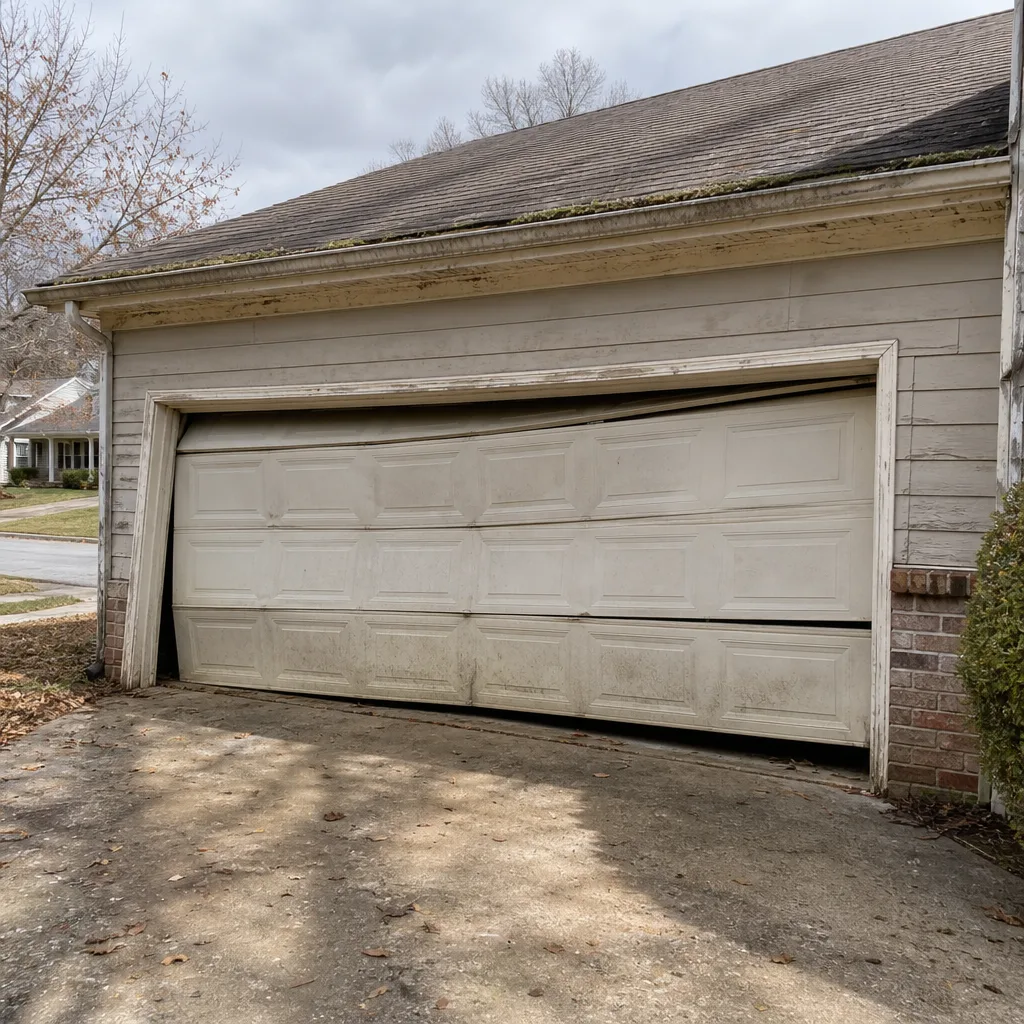 Before
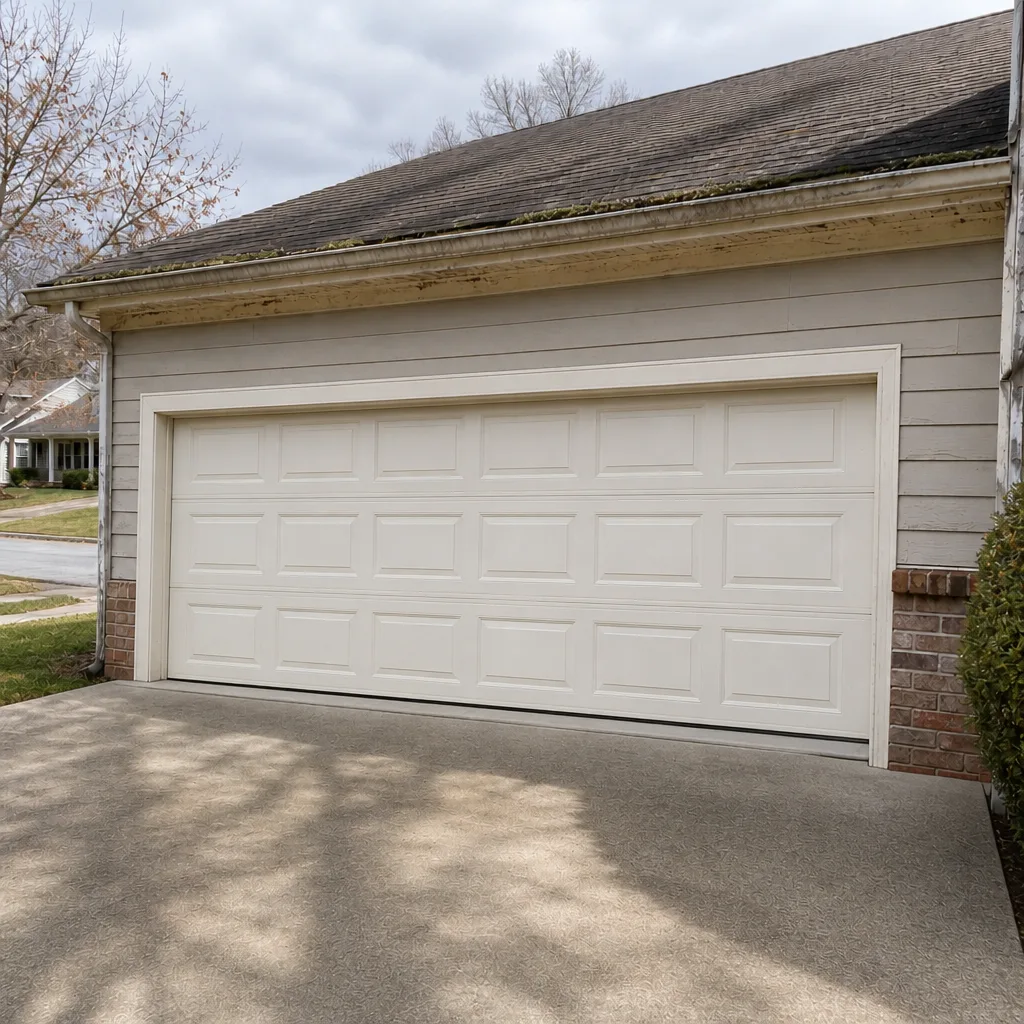 After
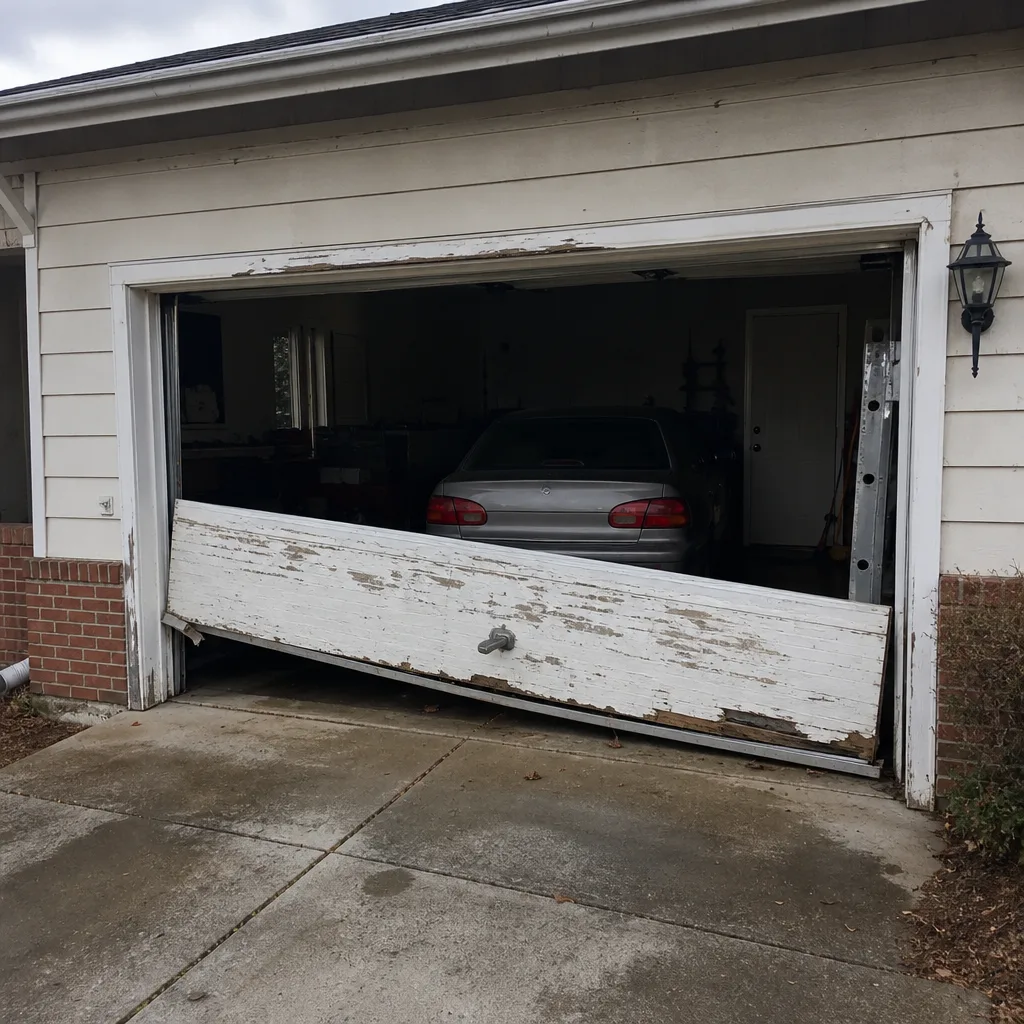 Before
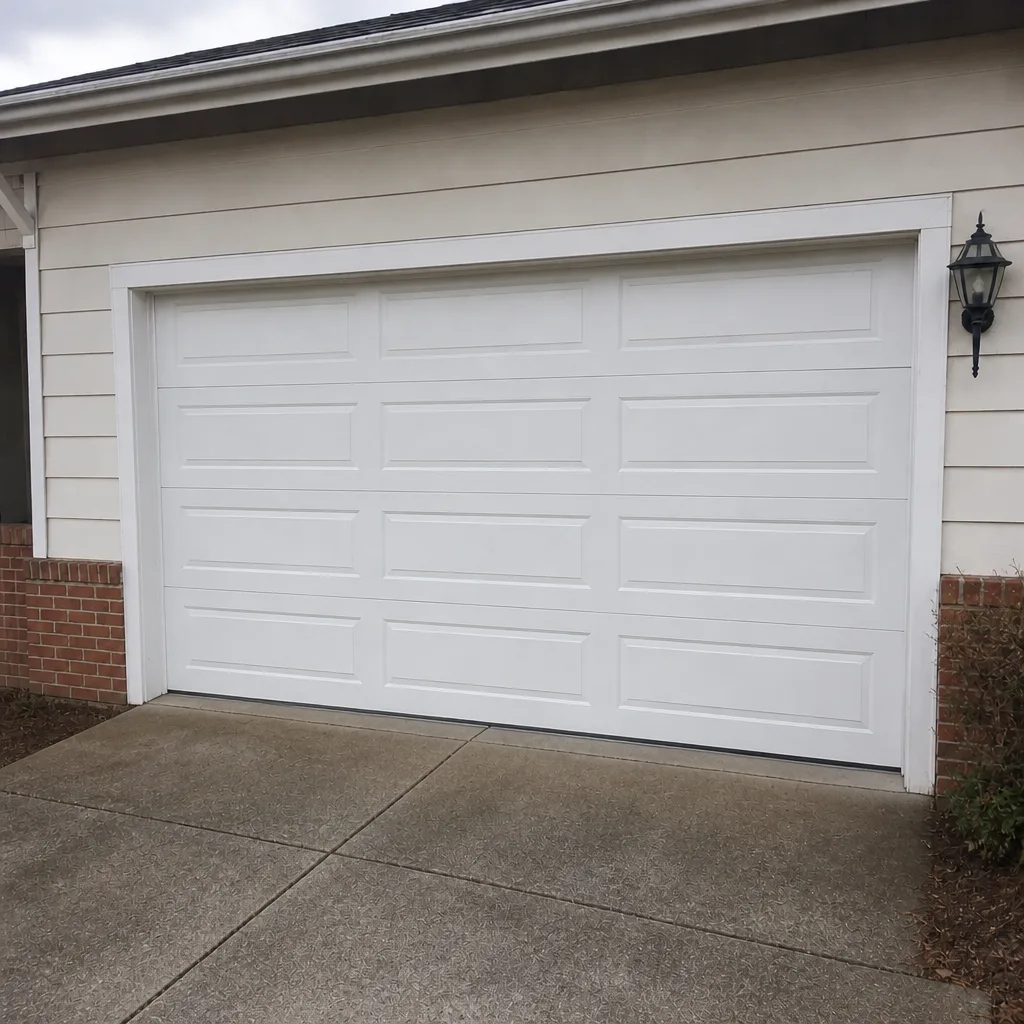 After
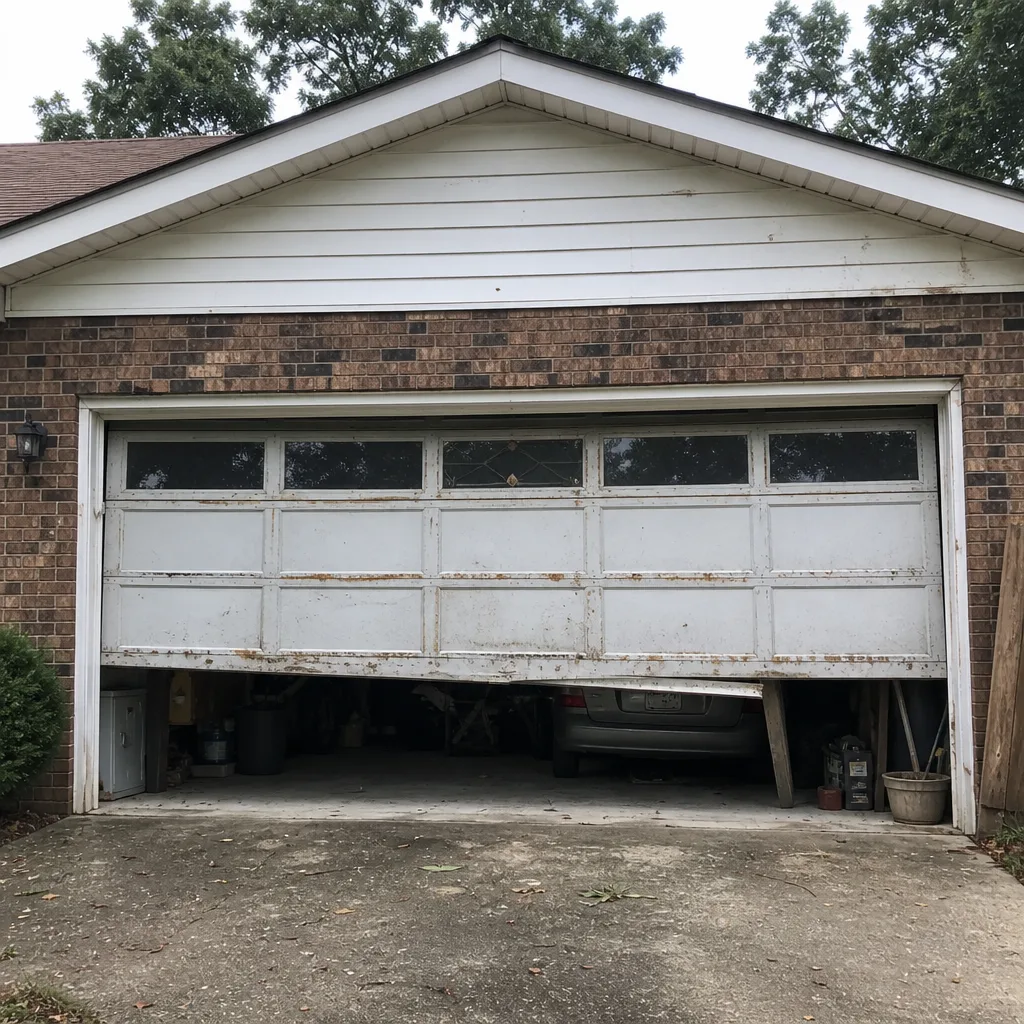 Before
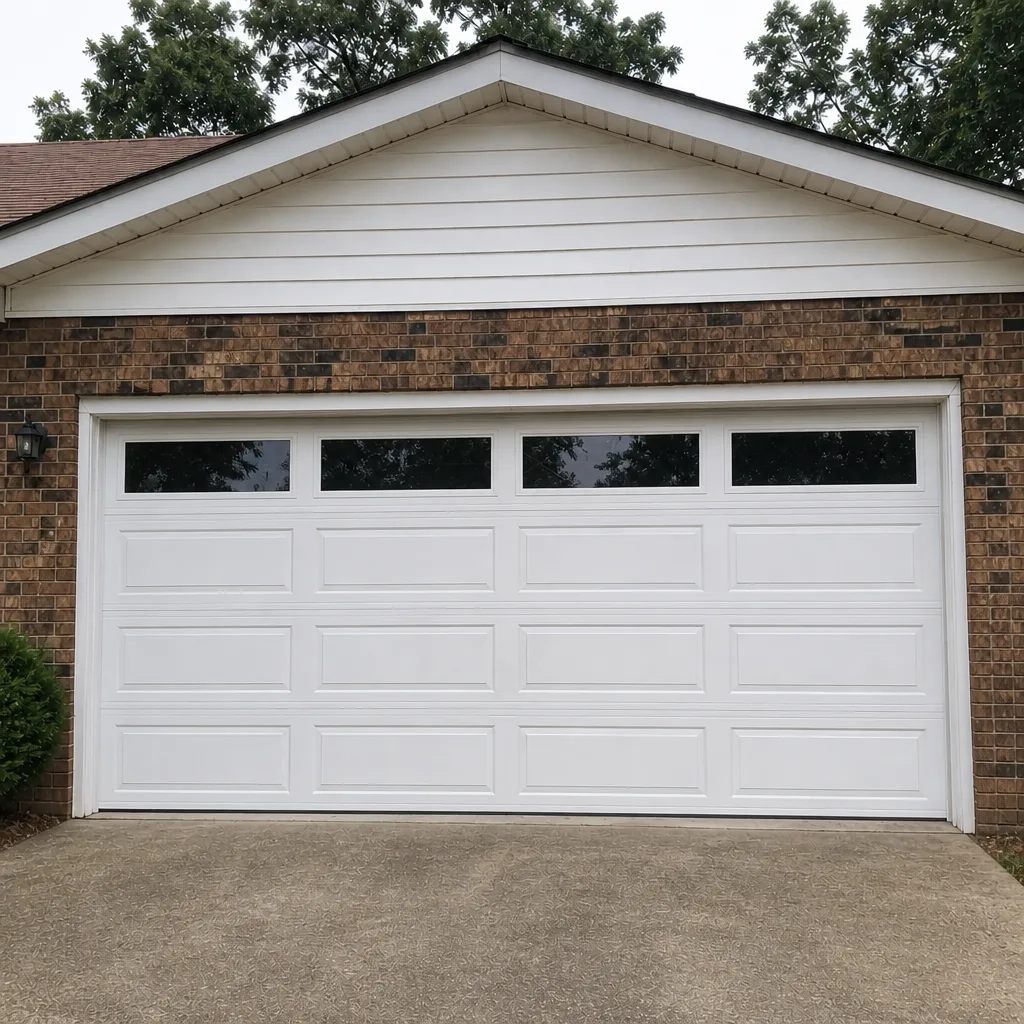 After
When to Call a Professional
Call a professional when any of your three manual tests fails – a heavy door, a door that won’t balance, or a slack or popped cable are all enough. Call immediately if you hear a loud pop and the door won’t lift, since that’s a broken spring and running the opener makes it worse. Call if the track looks bent or the door sits uneven at one end, because track problems don’t self-correct and the wear compounds. And call on any repair where your instinct is “I can probably force this.” Tandem Garage Door Repair offers free estimates in Greensboro – call (855) 554-0021. We answer 24/7, and dispatch runs Sunday through Friday, 7am to 7pm. If a door fails on a Saturday, we’re closed, and a Sunday call gets you booked into the next opening.
Frequently Asked Questions
Most garage door repairs in Greensboro run $180-$340 for a single torsion spring and about double that for a matched pair, with opener repairs typically in the $150-$400 range. Roller, hinge, and track adjustments cost less because they involve fewer parts and less labor. Every figure is an estimate; the written quote sets the price and is agreed before any work begins. Call (855) 554-0021 for a free estimate.
Spring, cable, track, and opener repairs can often be completed the same day, depending on parts availability and the diagnosis. Call (855) 554-0021 to book. We answer 24/7, and fast dispatch runs from 7am to 7pm, Sunday through Friday.
No. The technician diagnoses the door, explains what failed, and gives you a written quote before any work starts. The price on that quote is the price you pay; the estimate is free, and the price is set per job by the written estimate. Call (855) 554-0021 to get a number for your door.
Yes. We connect Greensboro homeowners to independent local professionals who are state-licensed and insured for garage door and opener work. Our technicians have up to 14 years of experience and are trained across LiftMaster, Chamberlain, Genie, Clopay, Amarr, Wayne Dalton, Craftsman, and Raynor systems. Call (855) 554-0021 for a free estimate.
A door that lifts a few inches and stalls almost always has too little spring tension – a failing or snapped torsion spring, or a cable off its drum. The opener is trying to lift more weight than the spring is offsetting, and the opener’s safety stops it before it can force the door. Don’t run the opener repeatedly; push the manual release if it’s safe to do so, and call for a diagnosis. Call (855) 554-0021.
For a Craftsman or Genie system with a simple gear or sensor fault, repair usually makes sense because the rest of the unit still works. For a smart LiftMaster or Chamberlain opener with a logic board failure, replacement is often the better value, since the board can cost close to a new unit. A brand-agnostic technician will tell you which case you’re in before doing the work – we work on the door you have, and we’ll say so if replacement is the honest answer. Call (855) 554-0021.
The Bottom Line
Most garage door misbehavior belongs to one of four systems, and learning to read which one is talking to you is the whole game. A door that reverses stays in opener logic and sensors. A door that won’t lift is a spring or cable. A gap that widens is a track. And a loud pop with a dead door is the signal to stop touching the opener and call someone. Run the three manual tests, respect the stop points, and let the right system get the right diagnosis. If you need a technician who reads the door before the parts catalog, Tandem Garage Door Repair serves Greensboro with free estimates and brand-agnostic service across LiftMaster, Chamberlain, Genie, Clopay, Amarr, Wayne Dalton, Craftsman, and Raynor hardware. Call (855) 554-0021 for a free estimate. We answer 24/7. Fast dispatch from 7am to 7pm, Sunday through Friday, and we’re closed Saturday. Whether you’re near Lake Jeanette, Fisher Park, or anywhere else around Greensboro, the pricing is set by the written estimate and agreed before any work begins.
Written by the team at Tandem Garage Door Repair.