
Last updated November 15, 2026
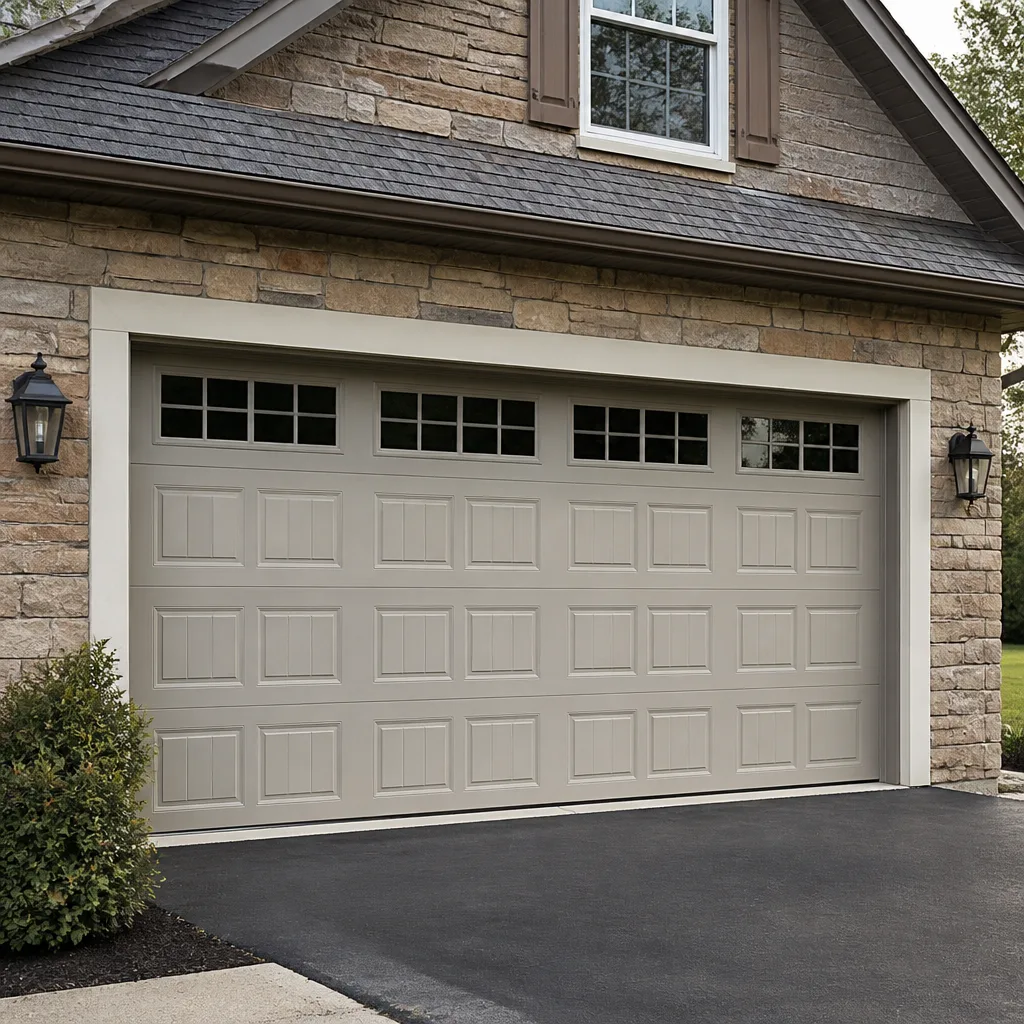 Raised-panel steel
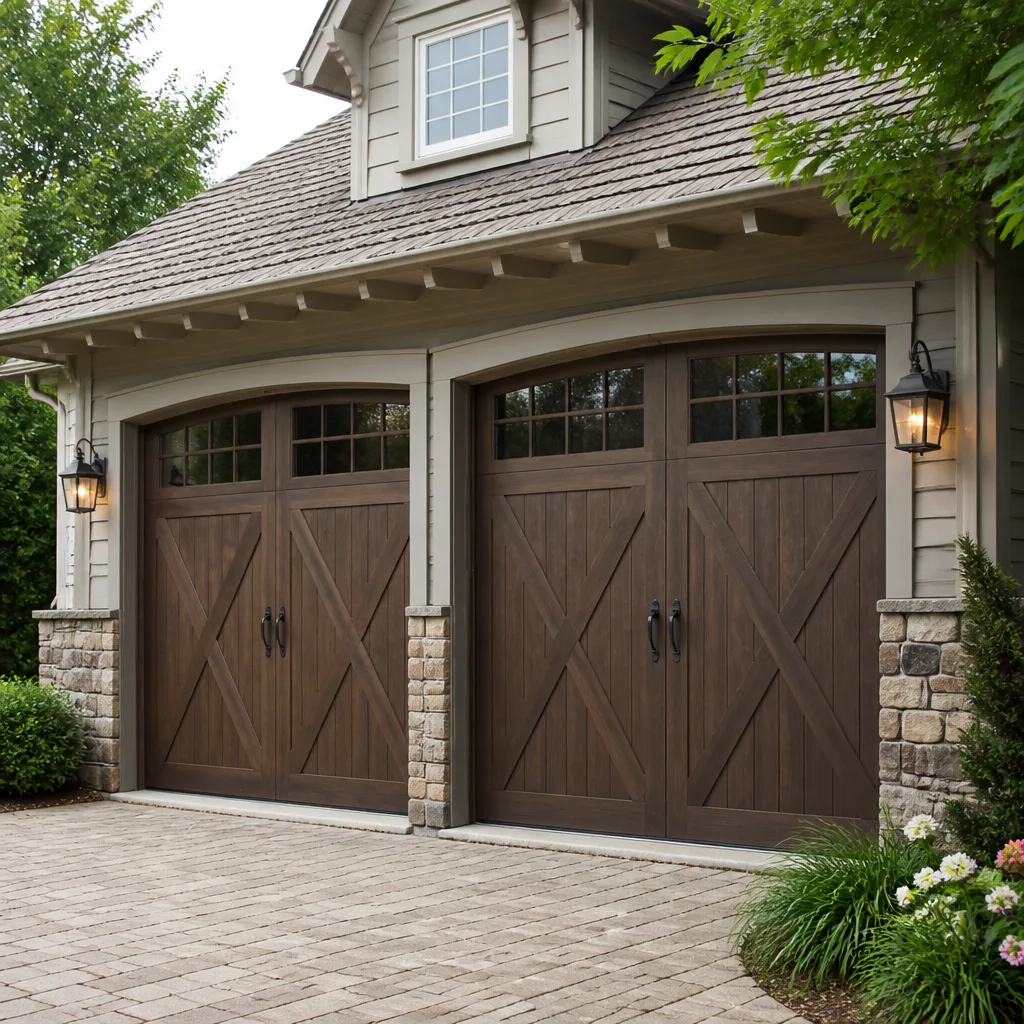 Carriage house
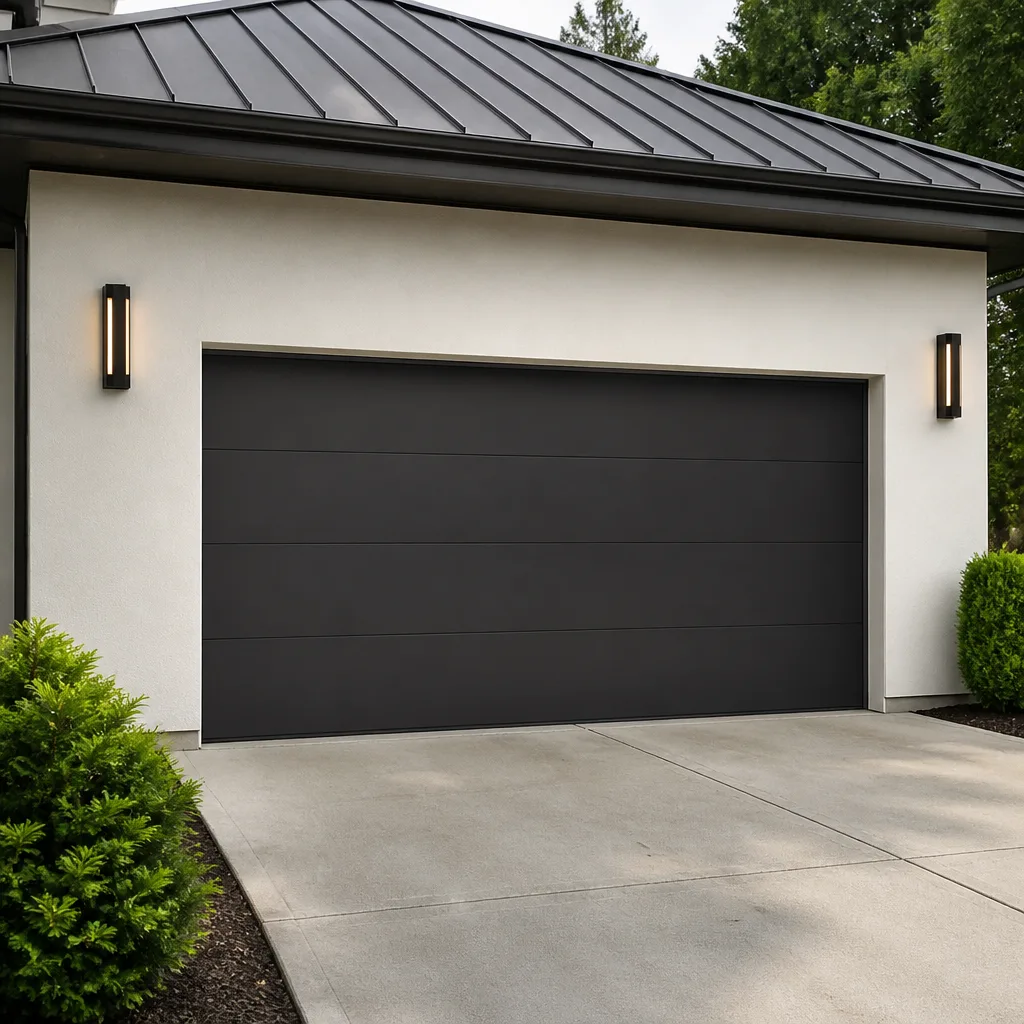 Modern flush
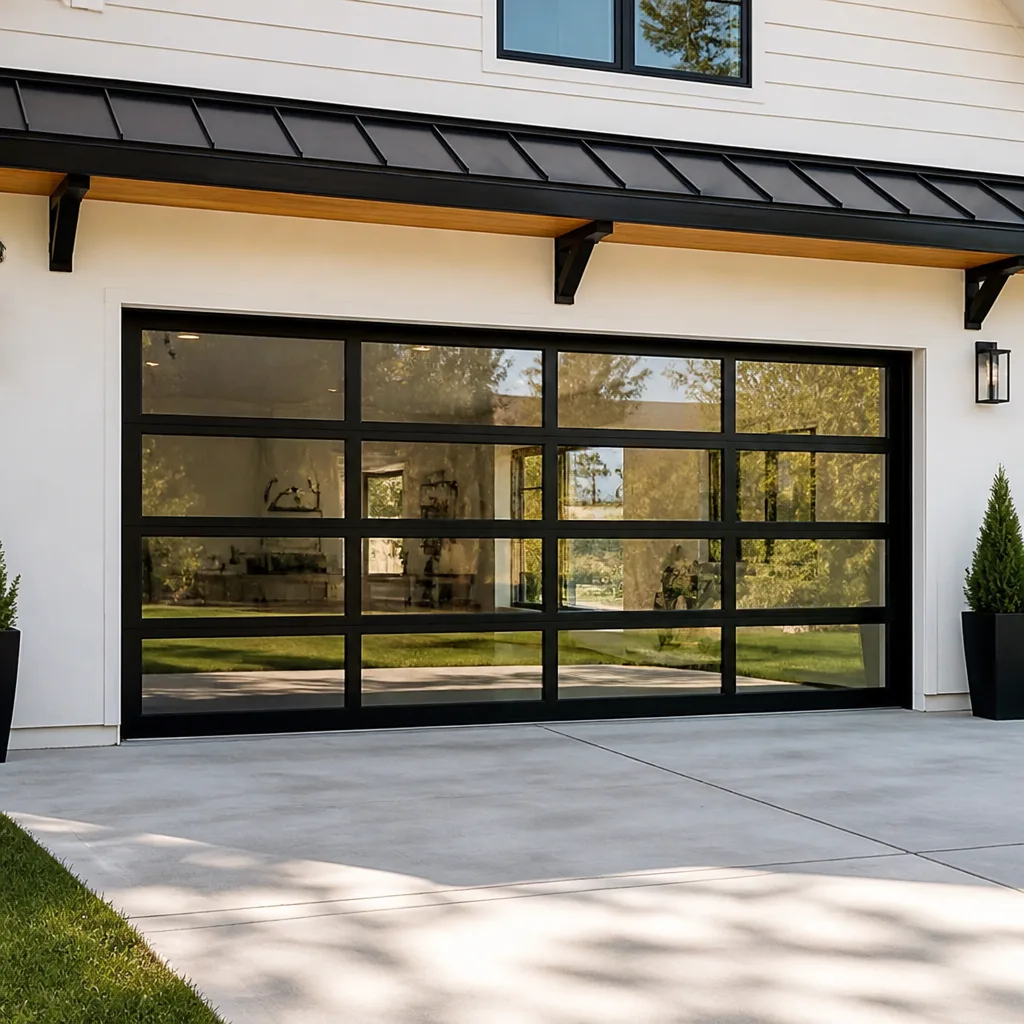 Full-view glass
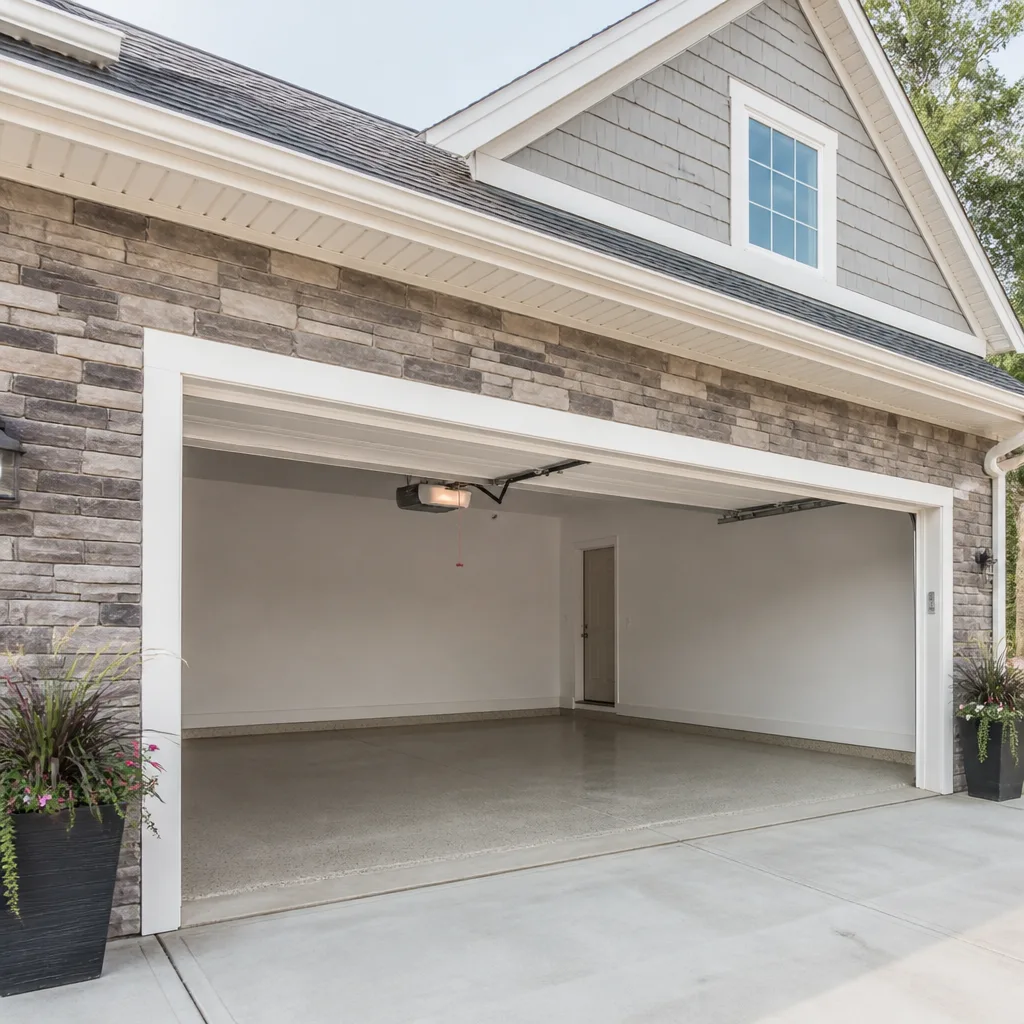 LiftMaster openers
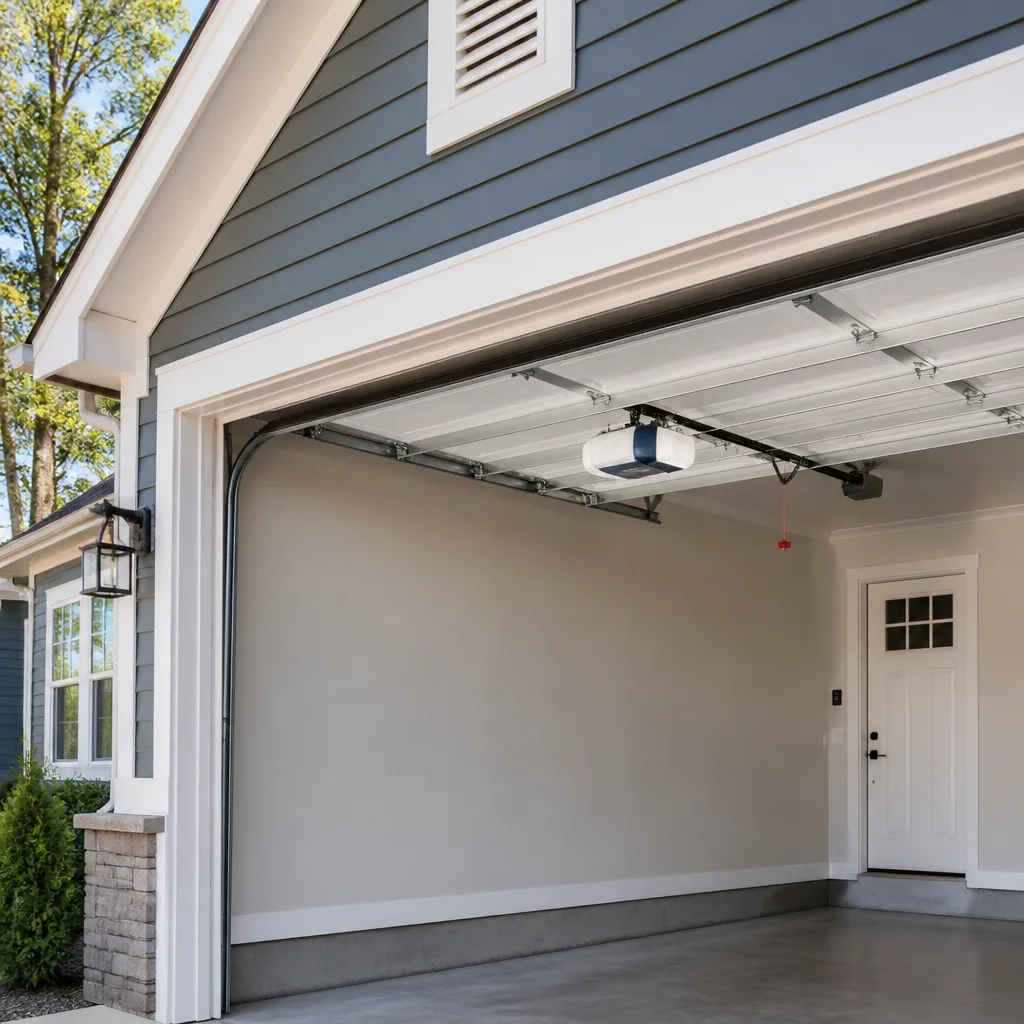 Chamberlain openers
Full 25-point door and opener safety check with every visit - springs, cables, rollers, tracks, and your LiftMaster or Chamberlain opener included
You get a price before we start. It does not change when the pro arrives.
Get your free estimateHow to Hire a Garage Door Contractor in Greensboro: A Step-by-Step Guide
There is no licensing requirement specific to garage door technicians in North Carolina, which means anyone with a truck and a tool bag can legally call themselves a garage door contractor. In Greensboro, that gap between “can call themselves” and “can actually diagnose your door” is where money gets wasted. Hiring the wrong contractor rarely feels wrong on the day of the call. It feels wrong a month later, when a part that was replaced fails again, or a new door was ordered without anyone checking whether your opener can lift it. This guide shows you how to vet a contractor the way a trade professional would: what to verify, what to ask, and what a proper diagnostic should look like.
Quick Answer
To hire a garage door contractor in Greensboro, verify their general contractor classification and insurance, ask which brands they service, and insist on a written diagnostic before any price is agreed. A qualified contractor diagnoses the door and opener you have, quotes the job in writing, and agrees the price with you before work starts. Prioritize specifics over speed: a detailed diagnostic beats three vague quotes every time.
Styles & brands we work with
- Raised-panel steel
- Carriage house
- Modern flush
- Full-view glass
- LiftMaster openers
- Chamberlain openers
Table of Contents
- What North Carolina Actually Requires
- How to Verify a Contractor Before You Sign
- Questions That Reveal a Brand-Agnostic Contractor
- Why One Detailed Diagnostic Beats Three Quotes
- Red Flags in a Garage Door Quote
- How to Evaluate Multi-Brand Capability
- What’s Different About Garage Doors in Greensboro
- Common Mistakes to Avoid
What North Carolina Actually Requires
North Carolina sets specific thresholds for general contracting, and garage door work sometimes lands on either side of them. That means the answer to “is this guy licensed?” is a chain of questions, not a single yes or no. Asking the right ones is how you separate a specialist from a truck.
Start with general contractor classification. The state splits general contracting into building, residential, and specialty classifications, with bidding thresholds that determine when a project requires a licensed general contractor. Structural changes around a garage opening, such as widening a bay or altering the header above the door, typically cross into work that needs a licensed professional. A straight replacement of an existing door in the same opening usually doesn’t. Ask the contractor which classification they hold and whether the job triggers it.
Permits are the second layer. Most cities require a permit for structural alterations that affect load-bearing elements, so ask Greensboro’s building department directly before work begins. The contractor’s answer should match what the city tells you.
Insurance is the part homeowners skim. North Carolina requires most employers with three or more employees to carry workers’ compensation coverage. A contractor with a helper or a second technician on site needs that coverage; if a worker is injured on your property without it, the risk lands uncomfortably close to you. General liability insurance is a separate policy and covers damage to your home or door. Ask for both, in writing.
- General contractor classification – confirm which classification applies to your job
- Permits – ask the city’s building department about structural work
- Workers’ compensation – required for larger employers; get proof
- General liability – protects your property, ask for a certificate
How to Verify a Contractor Before You Sign
Verification takes about fifteen minutes and saves you from nearly every regret in this guide. Most of it happens on the phone and on the state’s licensing and insurance records.
- Check the license and classification. Ask the contractor to state their classification in writing, then confirm it against the state licensing board’s public lookup.
- Request certificates of insurance. Ask for workers’ compensation and general liability certificates naming the policy holder. A certificate should come from the insurer, not from the contractor’s letterhead.
- Ask who performs the work. A specialist you hire should be the company that sends the technician. Subcontracted crews have their own insurance, and you should know whose it is.
- Confirm what’s covered. Ask what the written quote includes: parts, disposal of the old door, hauling, labor, permit costs.
- Verify the contact. Call the listed phone number and confirm it answers to the company name. A single, consistent phone line is a small but telling sign of a real operation.
None of this requires distrust. It’s the standard a good contractor expects from an informed customer. In our experience, the contractors worth hiring are the ones who answer these questions without hesitating.
Questions That Reveal a Brand-Agnostic Contractor
Brand-agnosticism is where a lot of homeowners get quietly steered. A contractor with a strong relationship to one brand, or a preference for the panels they keep in mind, will often recommend that brand whether it fits your situation or not. The problem isn’t the brand; it’s the recommendation. You want the recommendation to be driven by your door, not by the contractor’s margin.
Ask a contractor which brands they service on a routine basis. A specialist who works across multiple systems should name several without prompting. Tandem works across eight brands – LiftMaster, Chamberlain, Genie, Clopay, Amarr, Wayne Dalton, Craftsman, and Raynor – and the reason that matters is that we’re trained on competing systems, so the recommendation follows the door rather than what’s easy to order. Your situation might involve a LiftMaster opener and a Clopay door, or a Genie unit on an Amarr panel. A contractor who only works on one of those is guessing about the other.
Follow up with questions that reveal the reasoning behind their recommendation:
- “What would you recommend if the brands you stock weren’t a factor?” If the answer changes, the first recommendation was a stock decision, not a diagnosis.
- “How many brands have you serviced in the last year?” A vague answer means a narrow bench.
- “Can you service my opener if it’s a brand you don’t install?” A specialist should be able to service anything already on the door.
- “What’s the failure mode on this model?” A brand-aware technician knows common issues for specific hardware.
- “Can you explain how you’ll diagnose it?” Real answer: an inspection of springs, cables, tracks, rollers, and the opener’s internals, not a sales pitch.
If you’re specifically working through an opener problem, it’s worth understanding what garage door opener repair actually covers before you start talking to contractors. Knowing the scope makes the questions sharper.
Why One Detailed Diagnostic Beats Three Quotes
Getting three quotes is standard advice for buying a car or choosing a roofer. On garage door work, it can actively hurt you. Three quick quotes on a door you don’t understand often produce three different prices for three different jobs. One quote assumes a spring replacement. Another assumes a door replacement. A third assumes an opener issue. The prices aren’t comparable, and the cheapest one isn’t necessarily the right fix.
A single detailed diagnostic gives you a real decision to make. A proper diagnostic should include:
- Specific failure points identified. Not “the spring system” but which spring, and whether the torsion or extension system failed.
- Condition of cables, rollers, tracks, and hinges. These wear together, and a spring replacement on worn cables sets up a second failure.
- Opener state. Motor, gear assembly, travel limits, force settings, and safety sensors. This matters as much as the door itself.
- Panel and structural condition. Whether the door is worth repairing or whether replacement makes more sense from here.
- Written line items. Not a total. Each part and its labor separated out.
- A price that gets set before any work starts. The written estimate is the price.
One real diagnosis with line items beats three quotes every time. It tells you what failed, why, and what was done to fix it, and it moves the decision back into your hands. For anything beyond a simple adjustment, a professional garage door repair diagnosis is the standard starting point in Greensboro, and it’s worth the extra day or two to get it.
Red Flags in a Garage Door Quote
Most regret from a garage door job starts inside the quote itself. A quote that looks clean and simple can hide the exact gaps that later show up as a bigger invoice or a failed repair. Read every quote with these flags in mind.
Vague Line Items
“Spring replacement: $XXX” tells you nothing about which spring, whether it’s a matched pair, or how the cables are being handled. Real line items name the part, the count, and the labor separately. A single lump sum is a sign the contractor doesn’t want you looking too closely.
Parts Bundles
If a quote includes “spring kit,” “opener tune-up bundle,” or “full hardware package” without itemizing what’s in it, ask for the bundle to be broken out. Bundles can be a fair package, or a way to hide parts you don’t need. Without the line items, you can’t tell which.
“Repair or Replace” Framing
Presenting repair and replacement as an even choice puts the decision in the contractor’s hands, not yours. Ask for the diagnostic basis behind both options. If the door’s panels and structure are sound and the opener is serviceable, repair is usually the honest answer. If a lift problem or a structural issue makes the door unsafe, replacement may be right. What matters is that you understand why.
Pressure and Time Limits
“I can only hold this price today” is a sales tactic, not a diagnostic. A legitimate quote stands on the written estimate; a contractor confident in the work doesn’t need to force the decision.
Unexplained Fees
Fees that appear on the invoice but not the quote are the fastest way to a bigger bill. Ask up front whether the estimate includes everything: parts, labor, disposal, and any permit costs.
How to Evaluate Multi-Brand Capability
Multi-brand capability is the single most useful predictor of whether a contractor will fix the door you have, or just the door they’d prefer to install. It’s also relatively easy to evaluate.
Start with a straight question: which brands can you service? A genuine multi-system shop in Greensboro should be able to work on the hardware actually in homes here. That means being able to diagnose a Chamberlain or Genie opener with the same competence as a LiftMaster, and to install a Clopay or Amarr door without steering you to whatever brand they prefer to sell. A garage door is the largest moving object on most homes, and each brand’s hardware has quirks: torsion systems, panel profiles, opener logic boards. A contractor familiar with one brand will read those quirks as a mystery.
Test the claim with two follow-ups:
- Ask about smart-opener platforms. LiftMaster and Chamberlain are the two most widely installed smart opener platforms. Ask how they handle app setup, Wi-Fi pairing, and troubleshooting when the app goes offline. This separates them from technicians who can only install hardware and can’t troubleshoot the software side.
- Ask what they’d do with a mixed system. Your door and opener don’t have to match. A Genie opener on an Amarr door, or a Chamberlain opener on a Warner-Dalton door, is common. A contractor comfortable with both sides will answer without hedging.
If you’re weighing a full replacement, one more question separates a specialist from an installer: “What’s your diagnostic process before you order my door?” A good answer covers spring measurement, open weight, opener lift capacity, and clearances, and includes the full scope of Greensboro installation work in writing.
What’s Different About Garage Doors in Greensboro
Garage door work here has local factors that a contractor should be able to speak to directly. None of them are exotic, but together they shape what a fair quote looks like.
Greensboro’s climate swings between humid summers and occasional winter ice. Wood garage door panels expand and contract through that cycle, which can loosen hinges, warp panels, and stress the joints where panels meet. Steel doors fare better but still show rust at the bottom seam from pooled condensation. A contractor who understands this adjusts panel profiles and hardware rather than installing the same door they’d put on a house in a dry climate. A new door needs to fit your opening, your thermal expectations, and the humidity it’ll live in.
Housing stock varies widely here, from older homes in established neighborhoods near the center of town to newer construction on the edges. Doors from older homes often lack the structural support a modern opener requires, so a contractor who’s only worked on new construction may not anticipate that. When we take on a job in Greensboro, we check the opener’s mounting first, not the price tag on the new door.
Ask your contractor two local questions: how they handle wood and steel in this climate, and what they do on older homes where the header above the garage opening may be non-standard. Good answers are specific. Vague answers mean the quote is built on assumptions.
Common Mistakes to Avoid
- Hiring a general handyman for garage door work. A handyman may be a fine choice for many trades, but garage door springs, cables, and torsion systems can cause serious injury when handled by someone without training. Use a category specialist.
- Calling one contractor’s quote a “diagnosis.” A quote is a price. A diagnostic is a description of what failed and why. These are different documents, and only one protects you from an overpriced repair.
- Ordering a new door without checking the opener. A new door and a tired opener are a common mismatch in Greensboro. Lift capacity, travel limits, and safety sensors need to align. Ask before the door is ordered, not after.
- Accepting “repair or replace” framing without the diagnostic behind it. If the contractor presents both as an even choice, ask for the reason. If they can’t give it, you don’t have enough information to decide.
- Skipping work-comp and liability verification. In North Carolina, insurance requirements around employee coverage are real, and the person at risk when a worker is hurt on your property is you.
- Treating three vague quotes as three real options. They usually aren’t comparable. One real diagnostic with line items beats all three.
- Assuming a brand specialist can service your whole system. Your opener and your door may not share a brand. Ask up front if both can be serviced by the same contractor.
See the difference
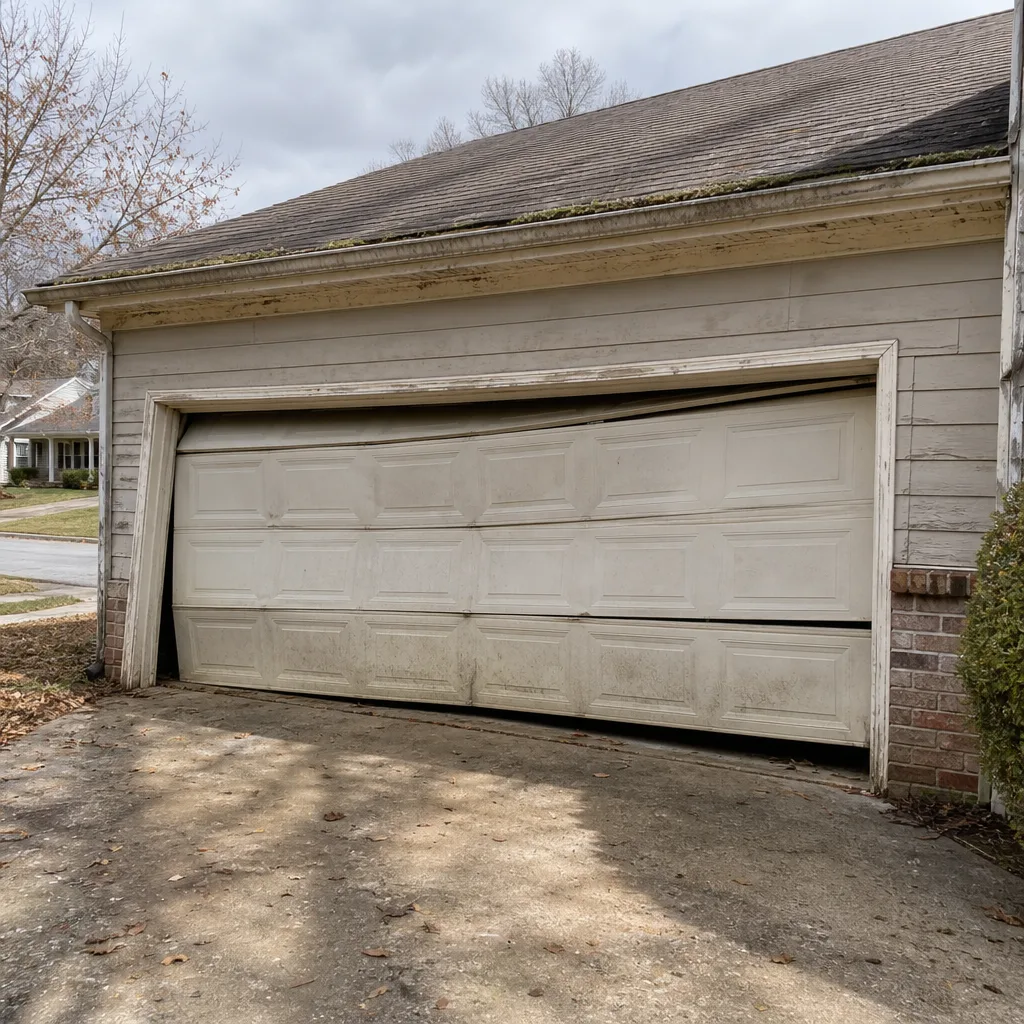 Before
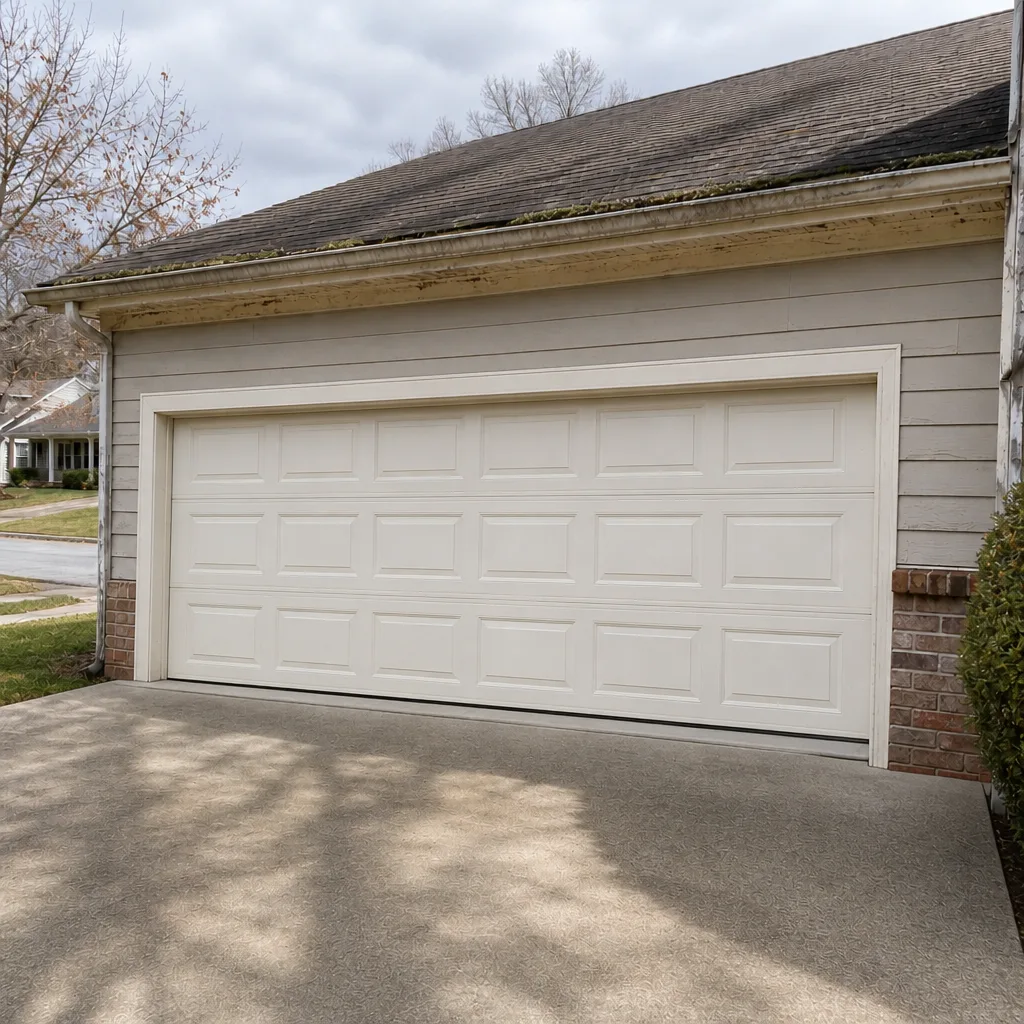 After
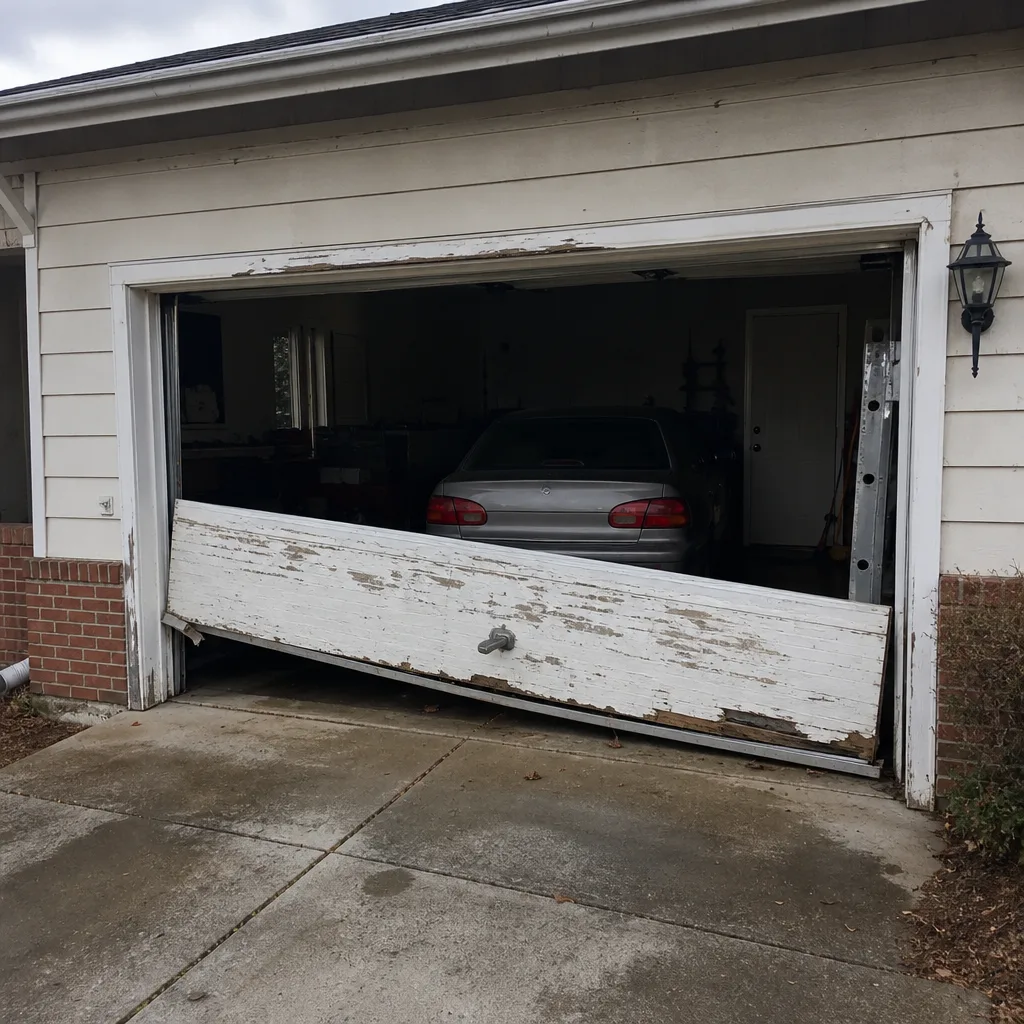 Before
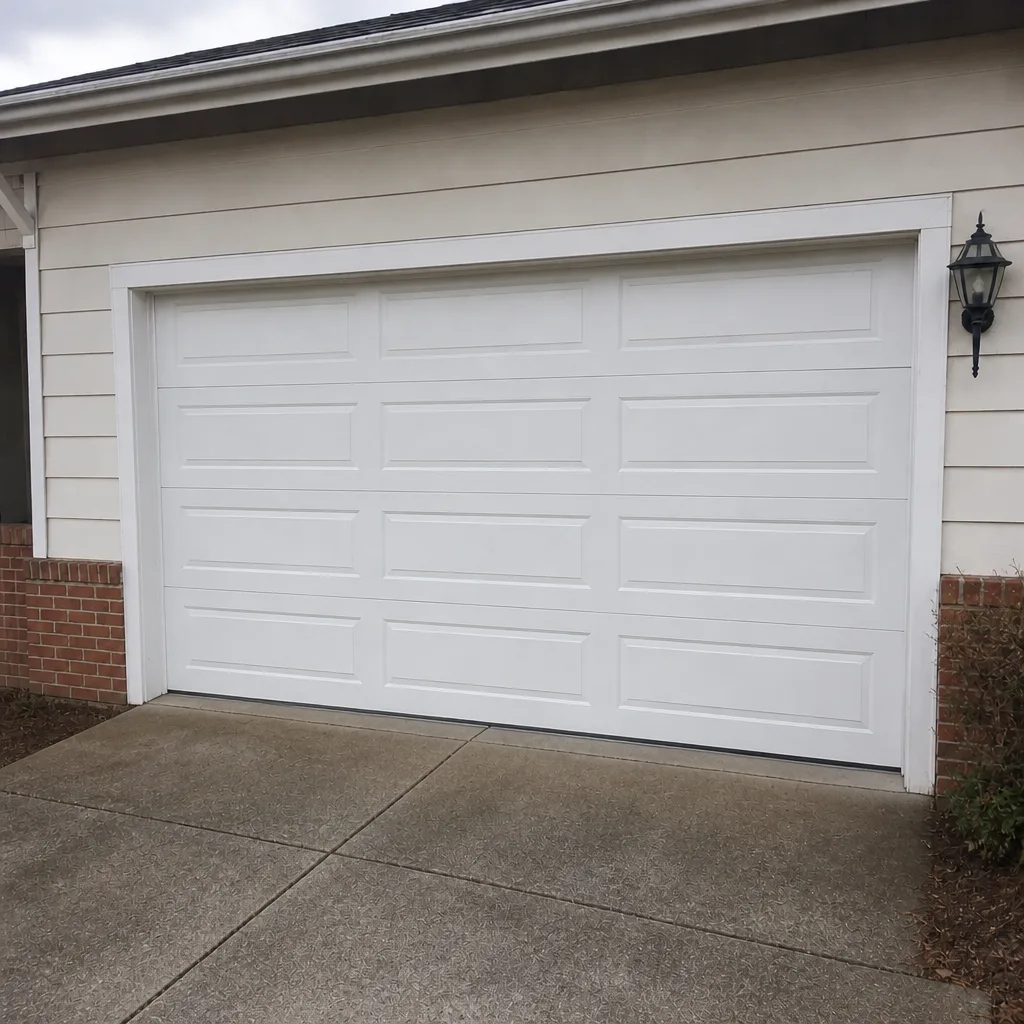 After
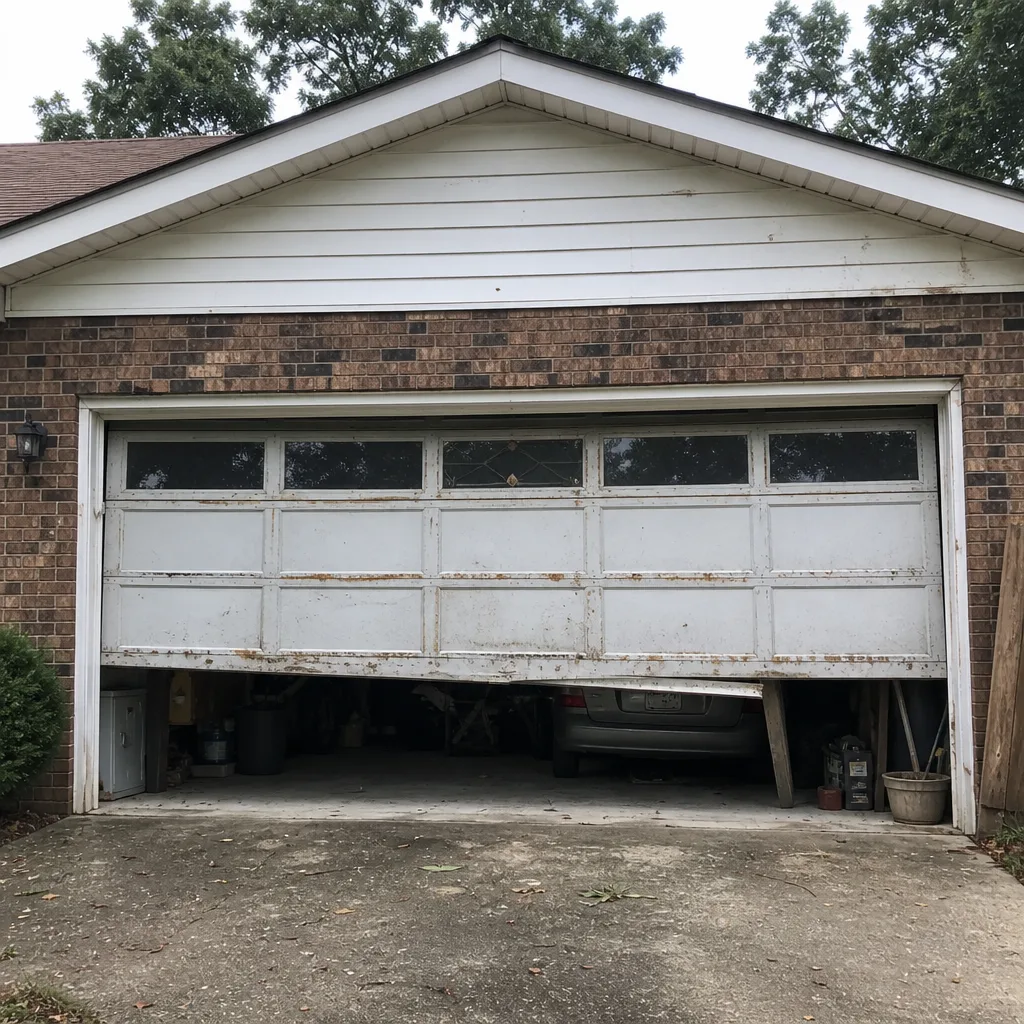 Before
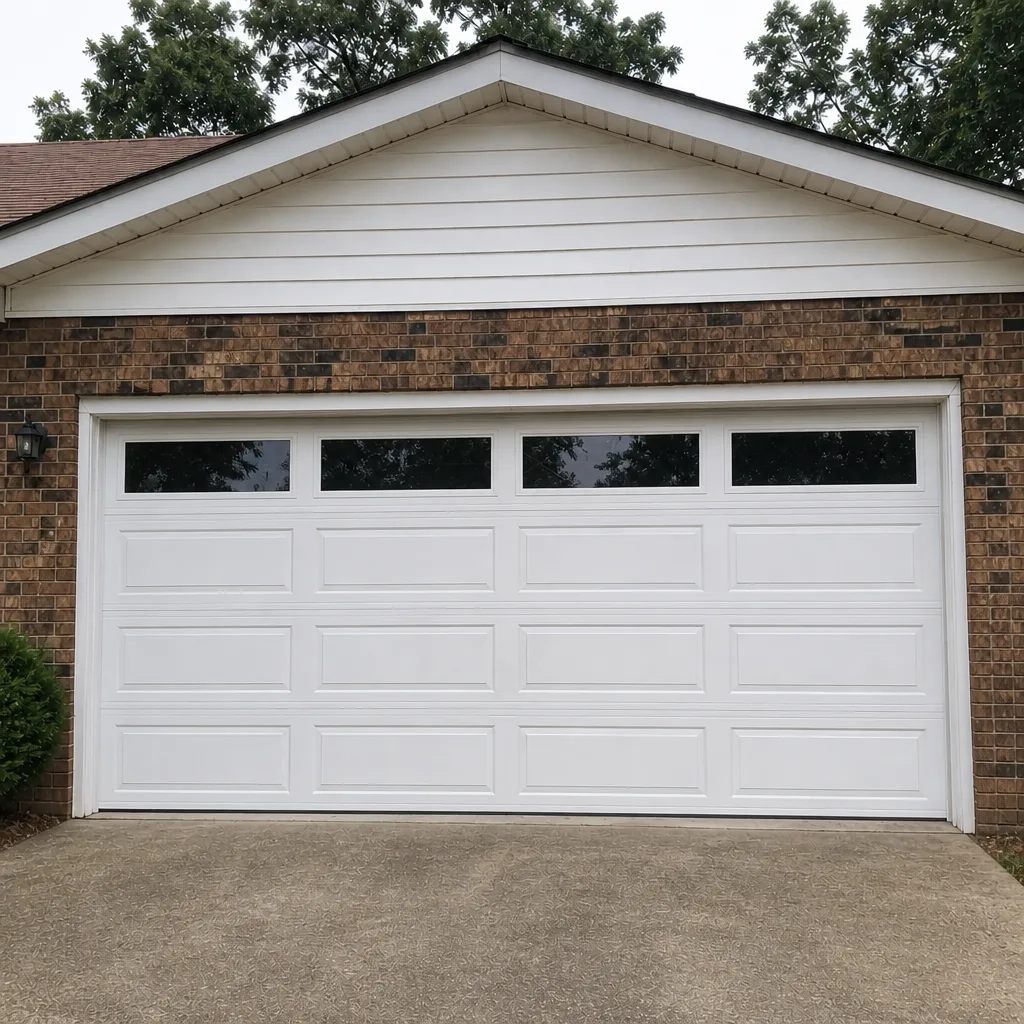 After
When to Call a Professional
Some garage door problems are a minor adjustment. Others need a trained technician, and in Greensboro, the difference is usually clear once you know what to look for. Call a professional if a spring has snapped or the door won’t lift under its own weight, if a cable has come off its drum, if the door is visibly crooked in its opening, or if the opener runs but the door doesn’t move. The same goes for any problem where a spring or torsion system is involved: those components store enough energy to cause serious injury, and they aren’t a homeowner fix.
Also call a professional for any door replacement or opener installation, and for opener software you can’t diagnose yourself. Tandem Garage Door Repair offers free estimates in Greensboro – call (855) 554-0021. Our technicians have up to 14 years of experience, and we work across the major opener brands so the diagnosis follows the hardware.
Frequently Asked Questions
North Carolina has no licensing requirement specific to garage door technicians, so the answer depends on the job. Straight replacements in an existing opening usually don’t require a licensed general contractor; structural changes around the opening, like widening it or altering the header, often do. Ask the contractor which general contractor classification applies, and confirm any permit question with Greensboro’s building department before work starts. Call (855) 554-0021 if you’d like help sorting out which category your job falls into.
No. Three quick quotes on a door you don’t understand often produce prices for three different jobs, and they aren’t comparable. One detailed diagnostic with itemized line items is more useful than three vague totals. The written estimate is the price, agreed before any work begins, and it moves the decision back into your hands. Call (855) 554-0021 for a free estimate.
Ask which brands they service routinely and what they’d recommend if stock weren’t a factor. A genuine multi-system shop covers multiple brands and diagnoses both the door and the opener. At Tandem, we work across LiftMaster, Chamberlain, Genie, Clopay, Amarr, Wayne Dalton, Craftsman, and Raynor, so your recommendation follows the hardware in your home, not a preferred brand. Call (855) 554-0021 with your brand details and we’ll tell you what we can do.
It shouldn’t. A proper quote is a written estimate with line items, and the written estimate is the price. If the scope of work changes during diagnosis, you should hear about it before any additional work is performed. Ask your contractor to state this explicitly up front. Call (855) 554-0021 for an estimate and we’ll put the price in writing before any work starts.
A quote is a price. A diagnostic is a description of what failed, why, and what should be done about it. You want both, but the diagnostic comes first and is what makes a quote trustworthy. Ask for the specific failure points, the state of the opener, and itemized line items, then compare. Call (855) 554-0021 if you’d like a diagnostic from a technician who works across the major brands.
Our technicians work across eight major garage door and opener brands, and we can provide insurance documentation on request. Our technicians have up to 14 years of experience, and every job is priced from a written estimate before work begins. Call (855) 554-0021 with your door’s brand and the symptoms you’re seeing; estimates are free. For a full picture of how we handle jobs, start with Tandem Garage Door Repair.
The Bottom Line
Hiring a garage door contractor in Greensboro comes down to three things: verify what the law actually requires, ask questions that separate a brand-agnostic specialist from a stocked-truck installer, and insist on a written diagnostic with line items before any price is agreed. Three quotes won’t tell you what’s wrong with your door; one detailed diagnostic will. If the contractor names the part that failed, explains the fix, and stands behind the written estimate, you’ve found the right one. If they hedge, push a bundle, or steer you toward a preferred brand, keep looking. Fixed once, fixed right is the standard; anything less costs more in the long run.
Ready to have someone diagnose rather than guess? Call Tandem Garage Door Repair at (855) 554-0021 for a free estimate. We answer 24/7, with fast dispatch from 7am to 7pm, Sunday through Friday.
Written by the team at Tandem Garage Door Repair.