
Last updated November 15, 2026
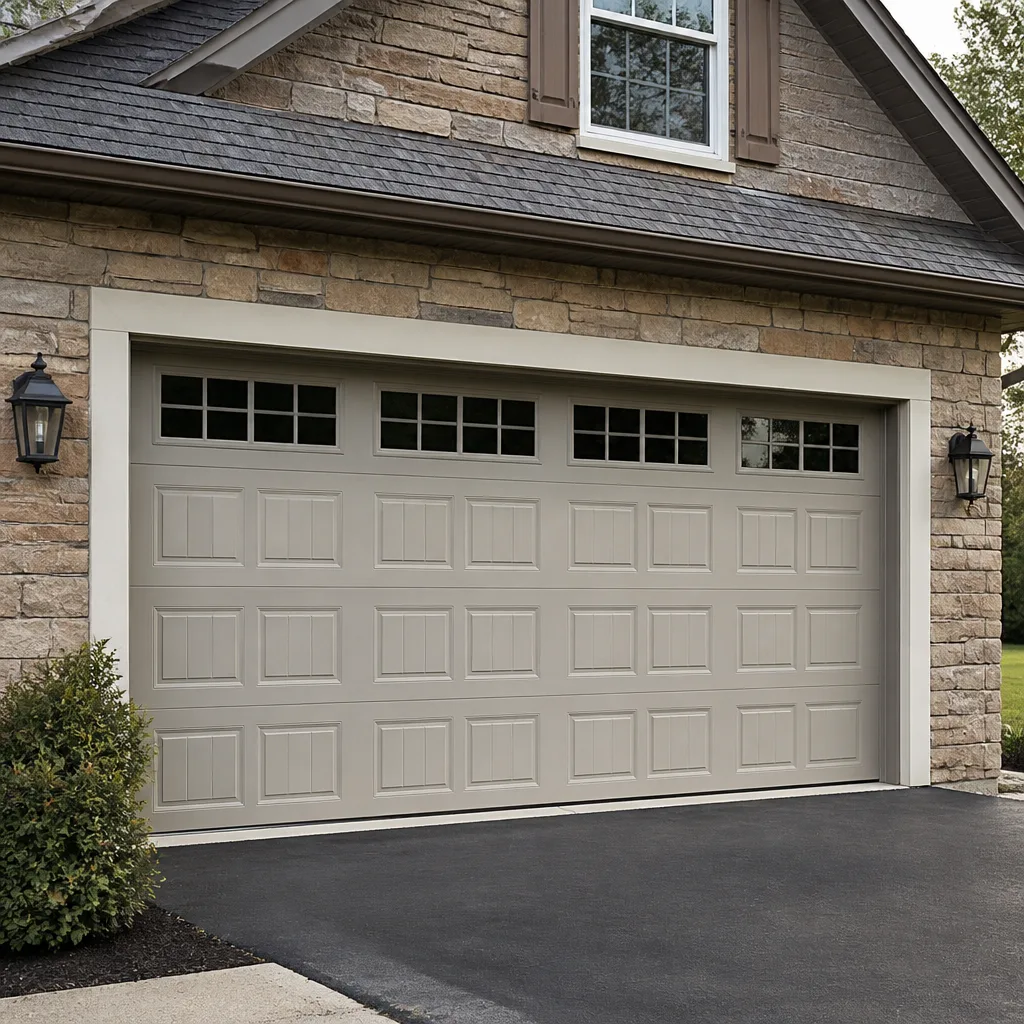 Raised-panel steel
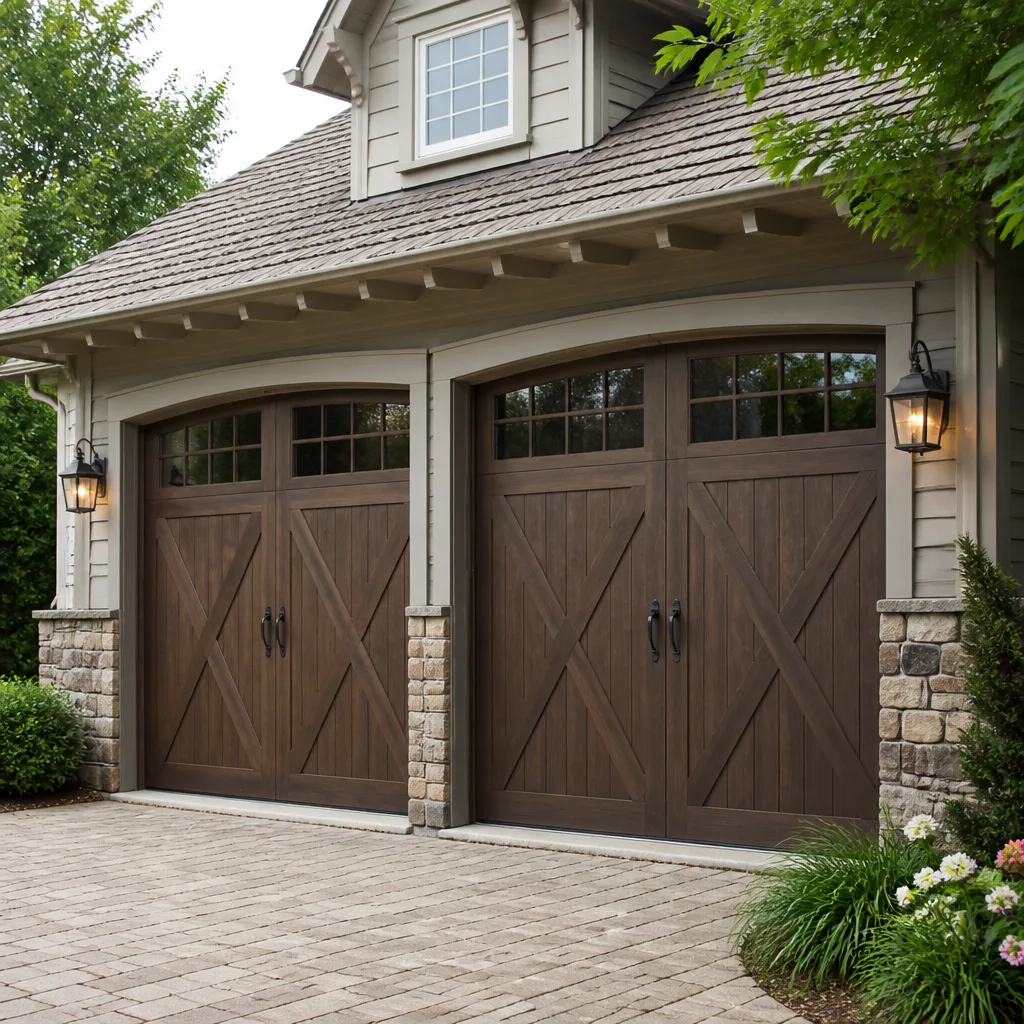 Carriage house
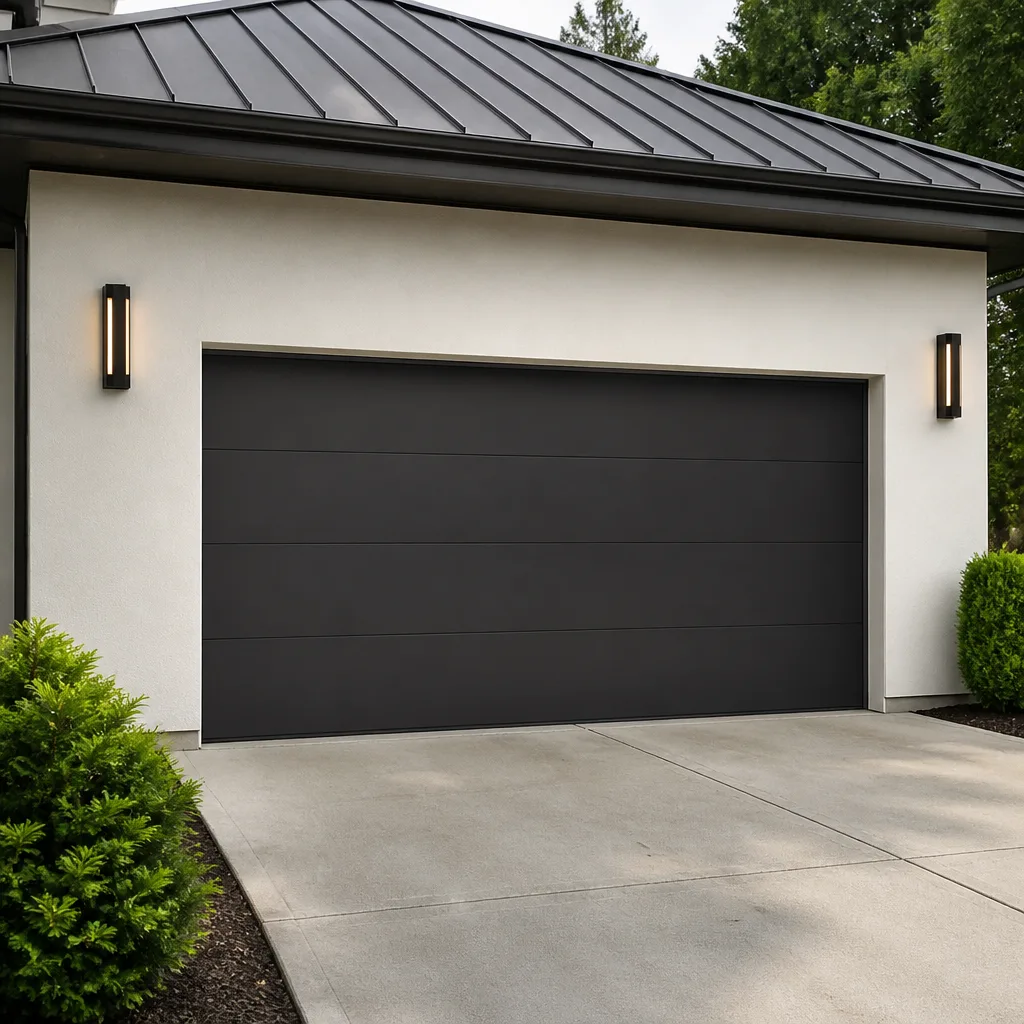 Modern flush
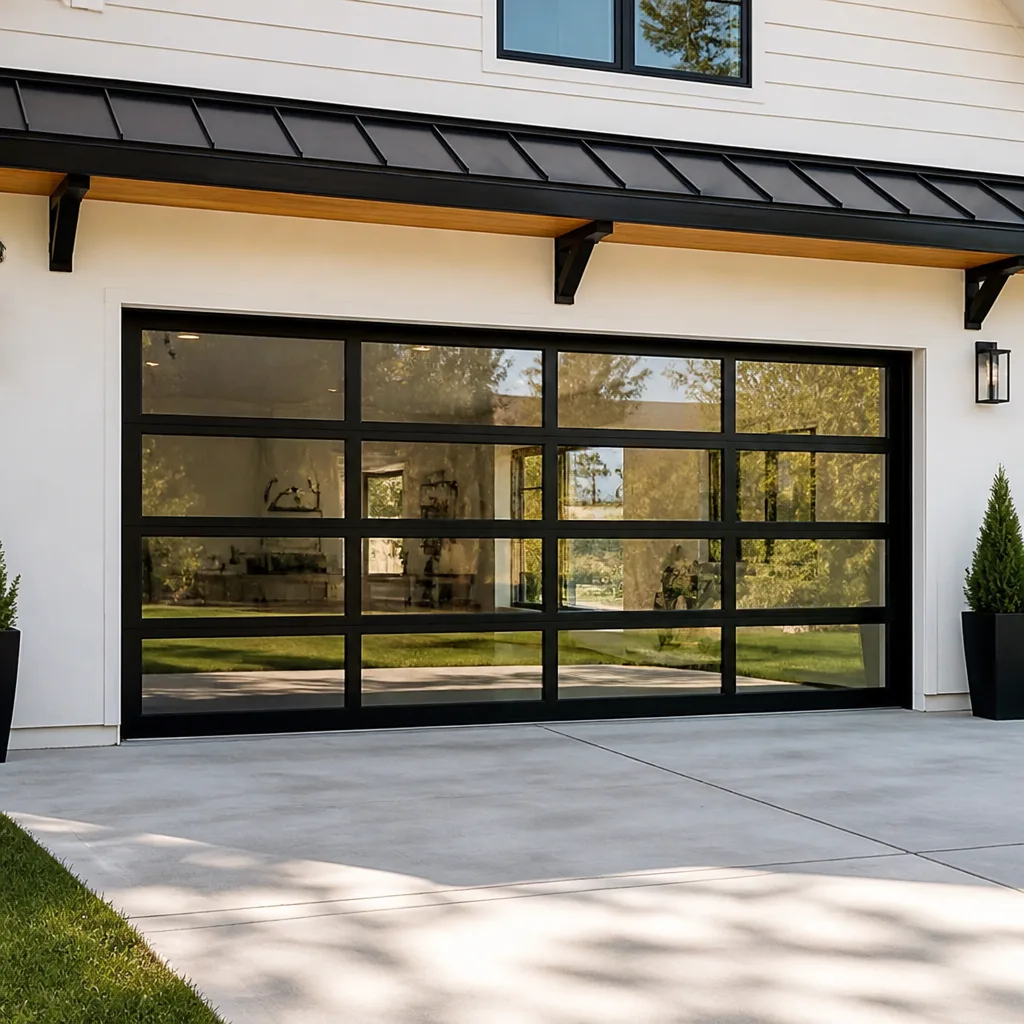 Full-view glass
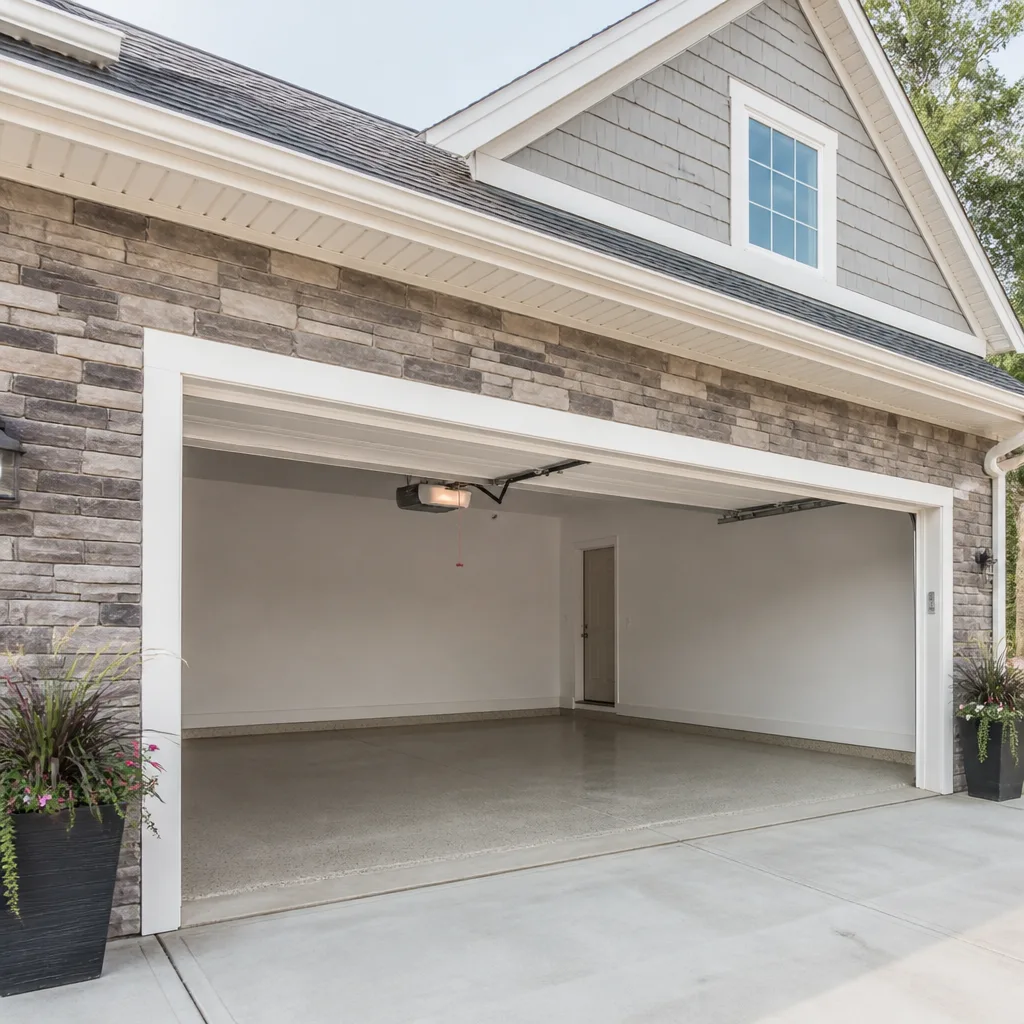 LiftMaster openers
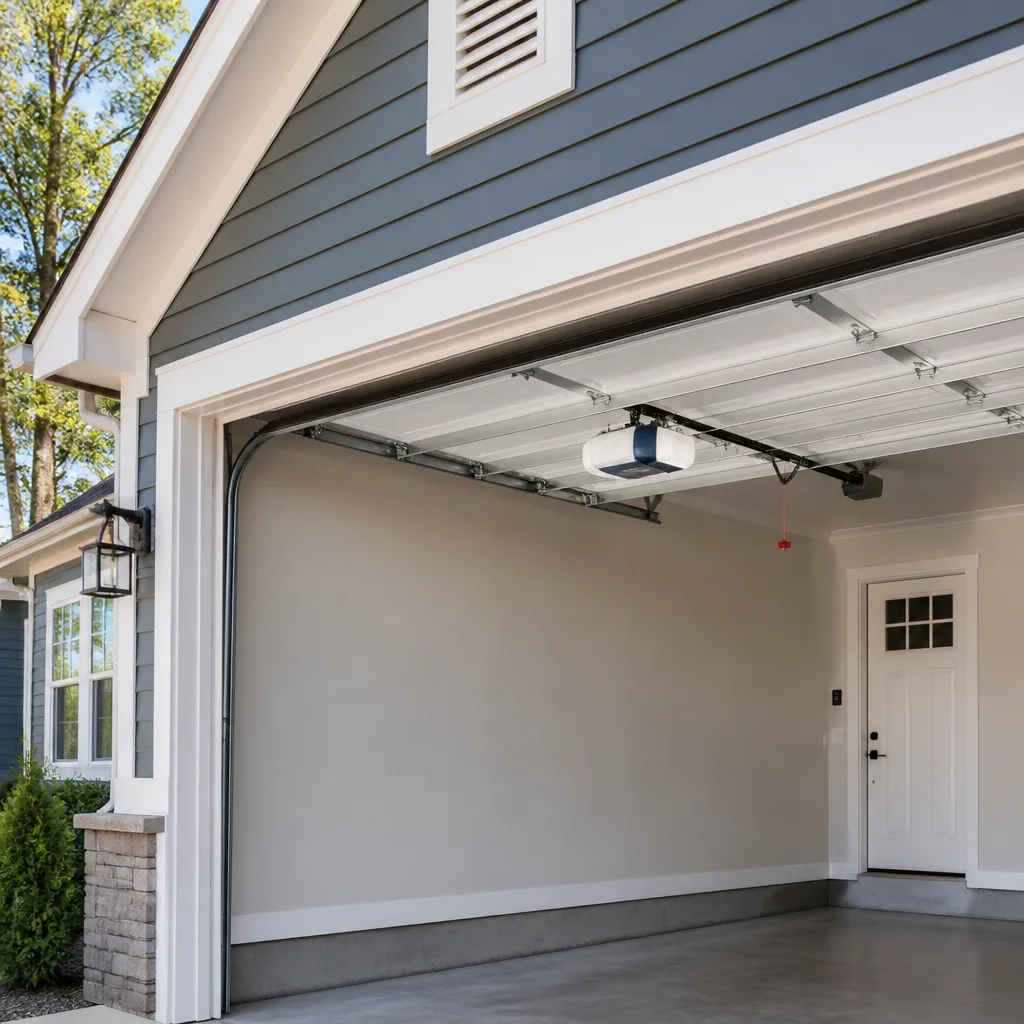 Chamberlain openers
Full 25-point door and opener safety check with every visit - springs, cables, rollers, tracks, and your LiftMaster or Chamberlain opener included
You get a price before we start. It does not change when the pro arrives.
Get your free estimateGarage Door Emergency Preparedness Guide for Greensboro Homes
During a Greensboro ice storm, the most common reason a homeowner can’t get their car out isn’t a snapped spring. It’s a rubber bottom seal frozen to the concrete apron. That problem takes about three minutes to solve if you know the method, and it can crack a door track if you don’t. The same pattern shows up in every garage door emergency here: the door fails in a predictable way, and the homeowner either knows the recovery procedure or makes it worse trying to force it. This guide covers the failure modes we actually see after ice, wind and power loss in Greensboro, the manual release procedure for each opener type, how to secure a door that’s stuck open, and what to have on hand before you ever need a technician.
Quick Answer
To handle a garage door emergency in Greensboro, secure the door first, then diagnose: if the door won’t move, check whether the opener is engaged or the seal is frozen before touching anything else. Pull the manual release only when the door is fully closed and the springs are intact, never force a door with a broken spring, and call a technician for anything involving springs, cables or the track. Most emergency calls here trace back to power loss, ice bonding the seal to the floor, or wind racking a panel – not to the motor itself.
Styles & brands we work with
- Raised-panel steel
- Carriage house
- Modern flush
- Full-view glass
- LiftMaster openers
- Chamberlain openers
Table of Contents
- Why Frozen Seals and Ice Are Greensboro’s First Emergency
- Power Outage: Releasing the Door on LiftMaster, Chamberlain and Genie Openers
- What to Do When the Door Is Stuck Open in Severe Weather
- Operating the Door Without Power Without Damaging the Opener
- The Emergency Information Sheet Every Greensboro Home Should Keep
- Post-Storm Inspection: What to Check After Wind and Ice
- When the Problem Is Springs or Cables: Stop and Call
- Preparing Your Door Before Storm Season Arrives
Why Frozen Seals and Ice Are Greensboro’s First Emergency
When the temperature drops below freezing and stays there overnight, the rubber bottom seal on a garage door can fuse to the concrete. The homeowner hits the opener button, the door flexes, and nothing lifts. The motor keeps pulling. That’s the moment damage happens: the bottom section can bow, the track can crack at the radius, and the opener’s drive gear can strip.
A frozen seal is not a broken door. It needs to be freed before the opener is used again. The safe approach is to break the bond along the full width of the seal with a tool that won’t gouge the rubber, working from one side to the other, and to keep the opener off until the door moves freely by hand. If the door still won’t lift after the seal is free, stop and look further up – the problem is no longer at the floor.
Greensboro’s winters swing between mild days and hard overnight freezes, and that freeze-thaw pattern is harder on bottom seals than a steady cold climate. Water pools under the seal, refreezes, and grips. Homes on sloped driveways or with poor drainage at the apron see this most often. If your seal has been compressed or torn for a while, it’s a cheap replacement that removes the whole failure mode before the next cold snap.
Spring and fall bring the other half of the problem: wind. Greensboro sits in a region where severe thunderstorms and the outer bands of tropical systems both push through, and a garage door is the largest opening on most houses. A door that’s already weak at the hinges or has a loose track is the one that fails first.
Power Outage: Releasing the Door on LiftMaster, Chamberlain and Genie Openers
The manual release procedure is not the same on every opener, and using the wrong technique can leave the door locked in the closed position or drop it unexpectedly. Here’s how the three most common opener families in Greensboro homes are released.
LiftMaster and Chamberlain (including belt and chain drives)
- Close the door fully and confirm no one is standing under it.
- Locate the red release handle hanging from the trolley on the rail. On most of these units it’s a red cord with a T-handle.
- Pull straight down and slightly toward the door until you feel the trolley disengage. You’ll hear it click.
- Lift the door by hand. It should move with steady resistance and stay where you leave it – that’s the springs doing their job.
- To re-engage, lift the door to just above the trolley and push the trolley back toward the opener until it locks.
On newer LiftMaster and Chamberlain units with a Wi-Fi or app-connected opener, the release works the same way, but the wall control may show a fault code after re-engagement. That clears once the door completes a full open-and-close cycle.
Genie and legacy chain drives
- Close the door first. This matters more on Genie units with a screw drive, where an engaged trolley under load can bind.
- Find the release cord on the carriage. On some Genie models the handle is red, on others it’s black or yellow – check the label on the rail.
- Pull the cord down and back at an angle, not straight down. Straight-down pulls on these units can leave the carriage half-released.
- Move the door by hand, then re-engage the same way: raise the door, slide the carriage to the opener, and let it lock.
Craftsman openers, which are still common on older Greensboro homes, follow the same pull-and-reengage pattern as Genie. If you’re not sure which system you have, the model label is usually on the back panel of the motor housing or inside the light cover.
One warning that applies to all three: never pull the release with the door open and the springs under tension unless you’re prepared to control the door’s full weight. A door with a broken spring has no counterbalance, and releasing it means it comes down hard.
What to Do When the Door Is Stuck Open in Severe Weather
A door stuck open during a windstorm or a security concern is an urgent problem, but the wrong fix can turn a stuck door into a damaged one. The goal is to secure the opening without loading the door in a way it wasn’t built for.
What works:
- Lower the door by hand if the springs are intact. Disengage the opener, walk the door down slowly, and let it rest fully closed. A closed door is its own brace.
- Brace the door with a wooden bar across the inside face if it can’t close, cut to fit snugly between the door and the header, with padding at both ends.
- Secure the track at the floor with a clamp or a brace against the vertical track if a panel is sagging outward.
- Block the opening from inside with a vehicle or furniture if the door can’t be closed and the weather is already here.
What makes it worse:
- Pushing or hammering a bent panel back into place. Panels are thin and will kink at the hinge line, and a kinked panel usually can’t be straightened – it has to be replaced.
- Forcing the opener to run against a jammed door. This strips the drive gear on the opener and can burn out the motor.
- Wedging anything between the door and the track to hold it. That loads the rollers at an angle and cracks the track radius.
- Tying the door down to the floor with straps pulled tight. Under wind load the door flexes and the strap anchors tear out of the concrete or the panel.
If the door is open and the wind is already significant, getting it closed by hand is the priority. A garage door repair visit can follow once the weather passes; forcing it during the storm is how a bent panel becomes a bent track and a bent track becomes a full replacement.
Operating the Door Without Power Without Damaging the Opener
Most opener damage we see after a power outage comes from one of three things: re-engaging the trolley while the door is still open, running the opener before the door has settled, or leaving the door mid-travel for hours. Here’s how to run the door safely on manual.
- Release the trolley with the door closed. Always. It’s the lowest-load position for the carriage and the safest place to disengage.
- Open and close by hand with steady pressure. Lift from the middle of the bottom section, not from one edge, and keep the door moving in one direction until it stops.
- Park the door fully open or fully closed – never mid-travel. A door left halfway puts constant tension on the springs and can drift down on its own.
- Re-engage the trolley before restoring power. Bring the door down by hand, raise it just above the trolley, and slide the carriage back until it clicks. Then run one full cycle from the wall control.
- Check the safety reverse after the first power cycle. Put a piece of wood under the door and close it. The door should reverse on contact. If it doesn’t, stop using the opener and have it checked.
The warranty question comes up often. On LiftMaster and Chamberlain systems, the drive warranty covers the motor and the belt or chain, and manual operation following the manufacturer’s release procedure doesn’t void it. Forcing the door against a jammed opener, or running the opener with the trolley disengaged, does. We work on both of those brands regularly and the failure pattern is consistent: the warranty claim fails because the unit was run under load, not because the door was opened by hand.
If your opener is a Genie or a Craftsman and the unit is old enough that the release cord has dried and stiffened, replace the cord before winter. A release you can’t pull cleanly is worse than no release at all.
The Emergency Information Sheet Every Greensboro Home Should Keep
You don’t want to be reading a model number off a motor housing at 11 PM on a Sunday in the dark. Put this information on a single sheet, laminate it or tape it inside the garage near the opener, and take a photo of it for your phone.
- Opener brand and model number. LiftMaster, Chamberlain, Genie, Craftsman and Raynor all have the label in different spots – on the back panel, inside the light cover, or on the rail. Write it down once and you’re done.
- Door brand and material. Clopay and Amarr both mark the door, usually on the inside of the top section or the end stile. Steel, aluminum and wood each have their own repair approach.
- Door size and panel count. Measure the width and height with the door closed.
- Number of springs. Torsion springs run across the shaft above the door; extension springs run along the horizontal track. Write down whether you have one or two, and torsion or extension.
- Safety feature type. Photoelectric eyes at the floor, a pneumatic edge, or both.
- Date of the last service. If you don’t know, write “unknown” – it tells the technician to check everything.
- Who installed it and when. If you bought the house with the door already in place, note that.
Pair that sheet with a small box in the garage: a flashlight that works, a pair of work gloves, and a step stool tall enough to reach the trolley. That’s the whole kit. It’s what we’d want in our own garages, and it’s the difference between a five-minute fix and a call.
Keep the Tandem number on the sheet too – (855) 554-0021. We answer 24/7, and fast dispatch runs 7am to 7pm, Sunday through Friday. Knowing who to call before you need to call is half the preparation.
Post-Storm Inspection: What to Check After Wind and Ice
After a significant wind or ice event in Greensboro, don’t just hit the opener button and assume you’re fine. Walk the door first. Most storm damage that turns into a bigger repair starts as something small that a five-minute inspection would have caught.
Walk the door closed
- Look at the bottom seal across its full width. Ice, debris and grit caught under the seal will tear it on the next cycle.
- Run a hand along the inside face of each panel and feel for dents, bows or separation at the hinge lines.
- Check the hinges at each joint. A hinge that’s bent or has a loose screw means the door took a load it wasn’t designed for.
- Inspect the vertical and horizontal tracks. A track that’s been pushed out of alignment will show a gap between the roller and the track edge.
- Look at the springs above the door. A broken torsion spring shows a visible gap in the coil; a broken extension spring is usually obvious at the loop.
- Test the safety reverse with a piece of wood on the floor, then test the photoelectric eyes by blocking them with your hand.
Watch the door through one full cycle
A door that’s been through a storm often runs slightly off-balance before it fails outright. Watch for any point where the door hesitates, lurches or runs faster than usual – that’s a spring or balance issue. Listen for scraping at the track or a rattle from the opener trolley. Any of those signs means get it looked at before the next cycle.
Ice storms in Greensboro leave a specific pattern: water freezes in the bottom track and in the gap between the seal and the floor, then the first opener cycle after the thaw pulls the seal loose or cracks a roller. After any ice event, clear the track and the apron before running the door at all.
When the Problem Is Springs or Cables: Stop and Call
Torsion springs on a residential door are under enough tension to cause serious injury, and the cables that run alongside them can whip if the tension releases suddenly. This is the one part of a garage door system that is genuinely dangerous to work on, and it’s not a DIY repair. If the door won’t lift by hand, if you see a gap in the spring coil, or if a cable is loose, frayed or off the drum, stop. Don’t pull the release, don’t try to lift the door, and don’t run the opener.
What a trained technician does is different from what a handyman guesses. The springs are matched to the door’s weight, the cables are re-tensioned with the right tools, and the door is balanced so the opener isn’t carrying load it wasn’t built for. Getting the spring spec wrong shortens the life of the whole system.
We work on the door you already have – Clopay, Amarr, Wayne Dalton, Raynor, and whatever else is on the house. A technician who’s seen the same system a hundred times diagnoses instead of guessing, and that’s what keeps a spring replacement from turning into a spring and cable and track replacement.
If the door is stuck closed and you need to get a vehicle out, don’t force it. Call (855) 554-0021 and we’ll talk through whether it can be opened safely or whether it needs to wait for the technician. We answer 24/7.
Preparing Your Door Before Storm Season Arrives
The best emergency prep happens on a mild day, not during the storm. A few checks before Greensboro’s ice and severe weather seasons make the difference between a door that handles the event and one that becomes the event.
- Replace a worn bottom seal. A seal that’s already compressed or split won’t survive a freeze cycle. New rubber seats against the concrete and doesn’t bond.
- Lubricate the hinges, rollers and springs with a garage door lubricant – not WD-40, which is a solvent and will dry out the moving parts.
- Test the balance. Disengage the opener with the door closed, then lift it halfway and let go. A balanced door stays put. One that drops or rises on its own needs a spring adjustment.
- Test the safety reverse and the photoelectric eyes once a season.
- Check the track for loose bolts at the brackets and tighten anything that’s worked loose.
- Clear the apron and track of debris and check that water drains away from the door, not under it.
If your opener is old enough that it doesn’t have a battery backup, that’s worth knowing before an outage. LiftMaster and Chamberlain both make battery-backup units that raise and lower the door several times on a charge, and for a household that depends on the garage as its main entry, that’s a meaningful upgrade. It doesn’t fix a broken spring, but it keeps you moving when the power is the only problem.
For a door that’s near the end of its life, a Tandem Garage Door Repair assessment before storm season is cheaper than a mid-storm replacement. A door that’s already rattling or sagging is the one that fails when the wind hits.
Common Mistakes to Avoid
- Forcing the opener against a frozen or stuck door. The motor keeps pulling, the drive gear strips, and the repair moves from the seal to the opener. Free the door by hand first, every time.
- Pulling the manual release with the door open. On a door with a broken spring, that means the full weight of the door comes down with nothing to stop it. Release only with the door closed and the springs intact.
- Running the opener with the trolley disengaged. This is the most common cause of warranty claims being denied on LiftMaster and Chamberlain units – the motor runs with no load and the travel limits drift.
- Hammering a bent panel back into place. Panels kink at the hinge line and can’t be straightened once they do. What was a panel replacement becomes a panel plus hinge plus track repair.
- Using a general handyman for spring work. Springs have to be matched to the door’s weight and the winding has to be done with the right tools. A handyman who guesses usually gets a second visit.
- Skipping the post-storm walk-around. Ice and wind leave small damage that turns into a bigger repair on the next cycle. The five-minute inspection is the whole point.
- Not knowing which opener you have. A release procedure written for a Genie can lock a Chamberlain trolley in the closed position. Know your system before the power goes out.
See the difference
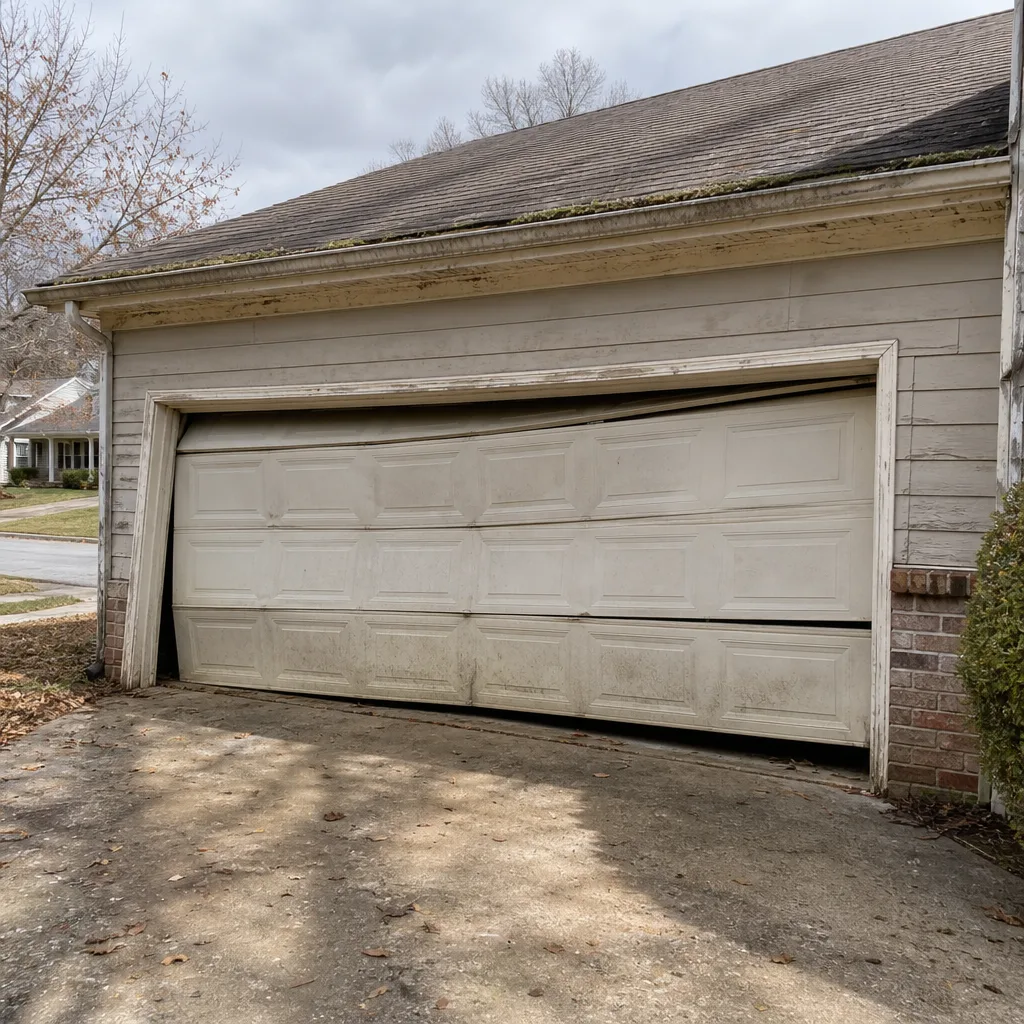 Before
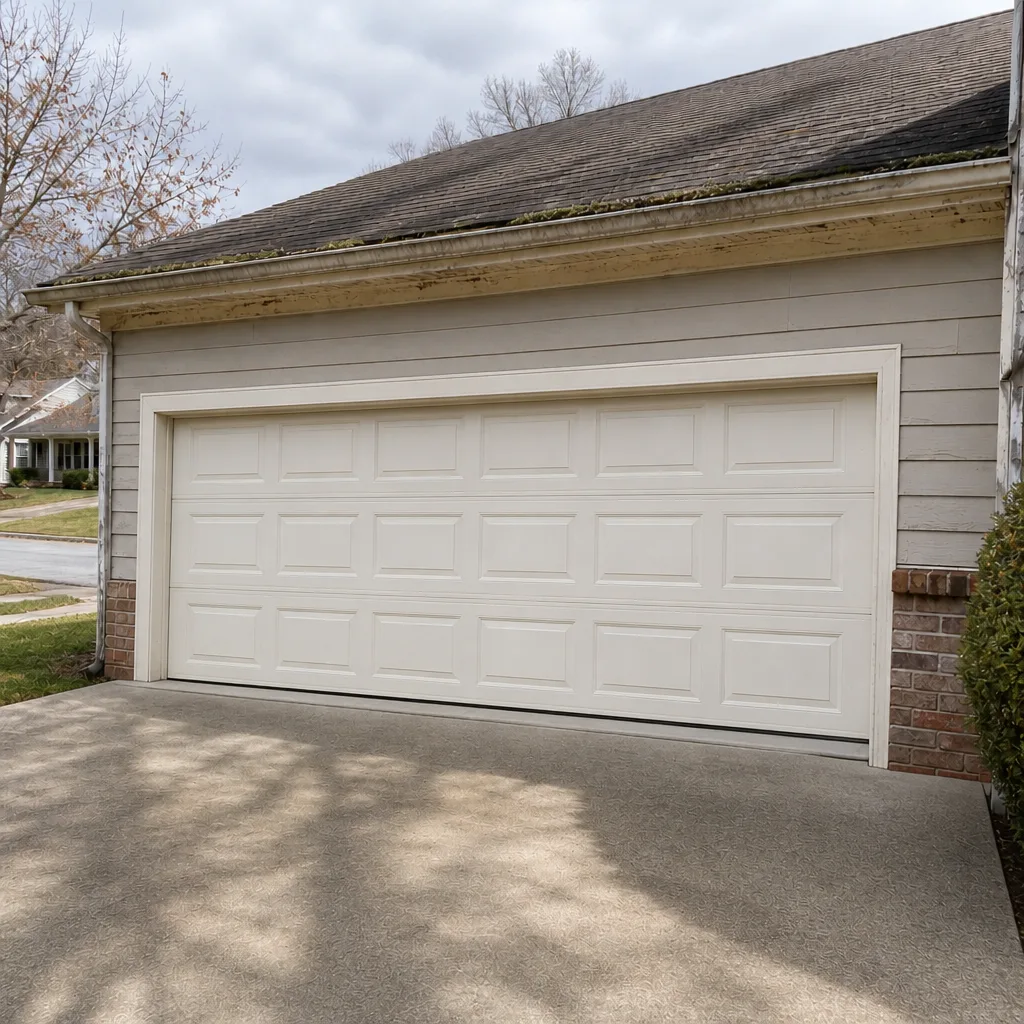 After
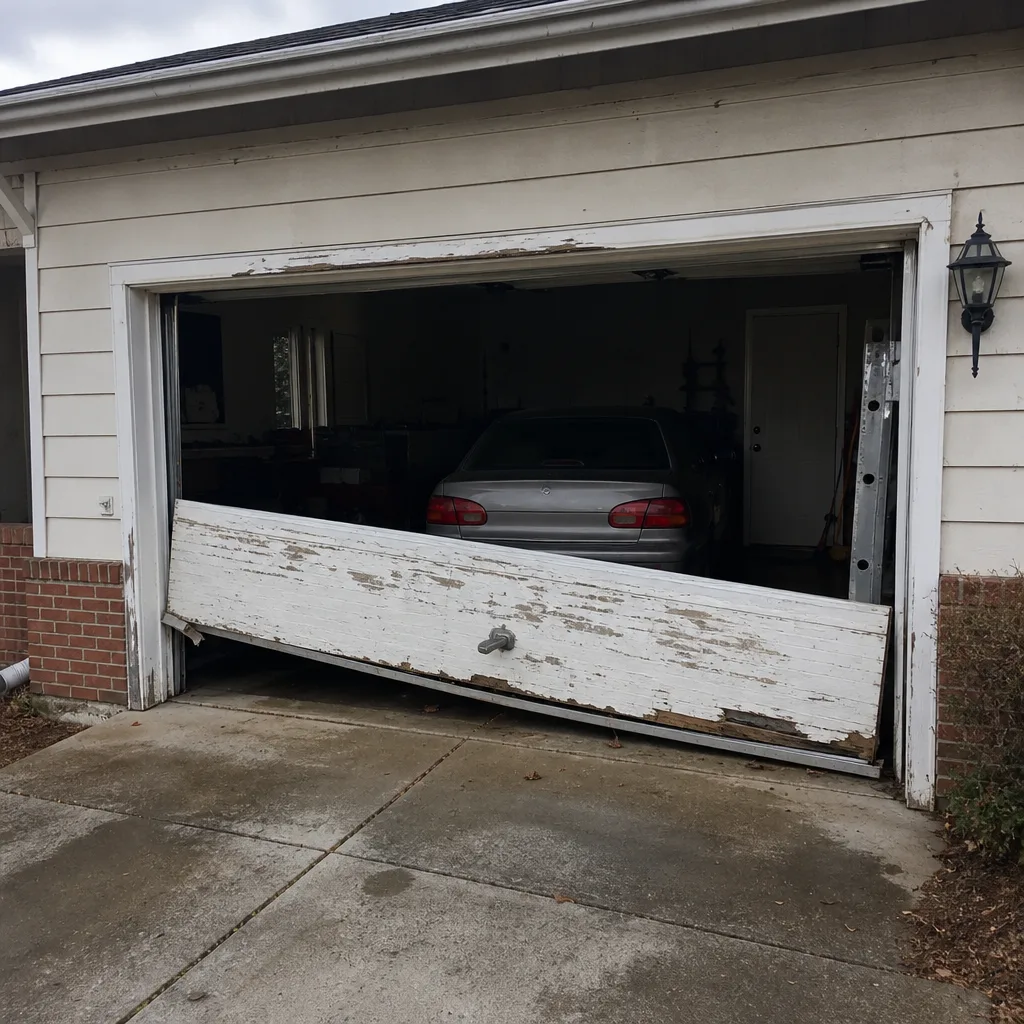 Before
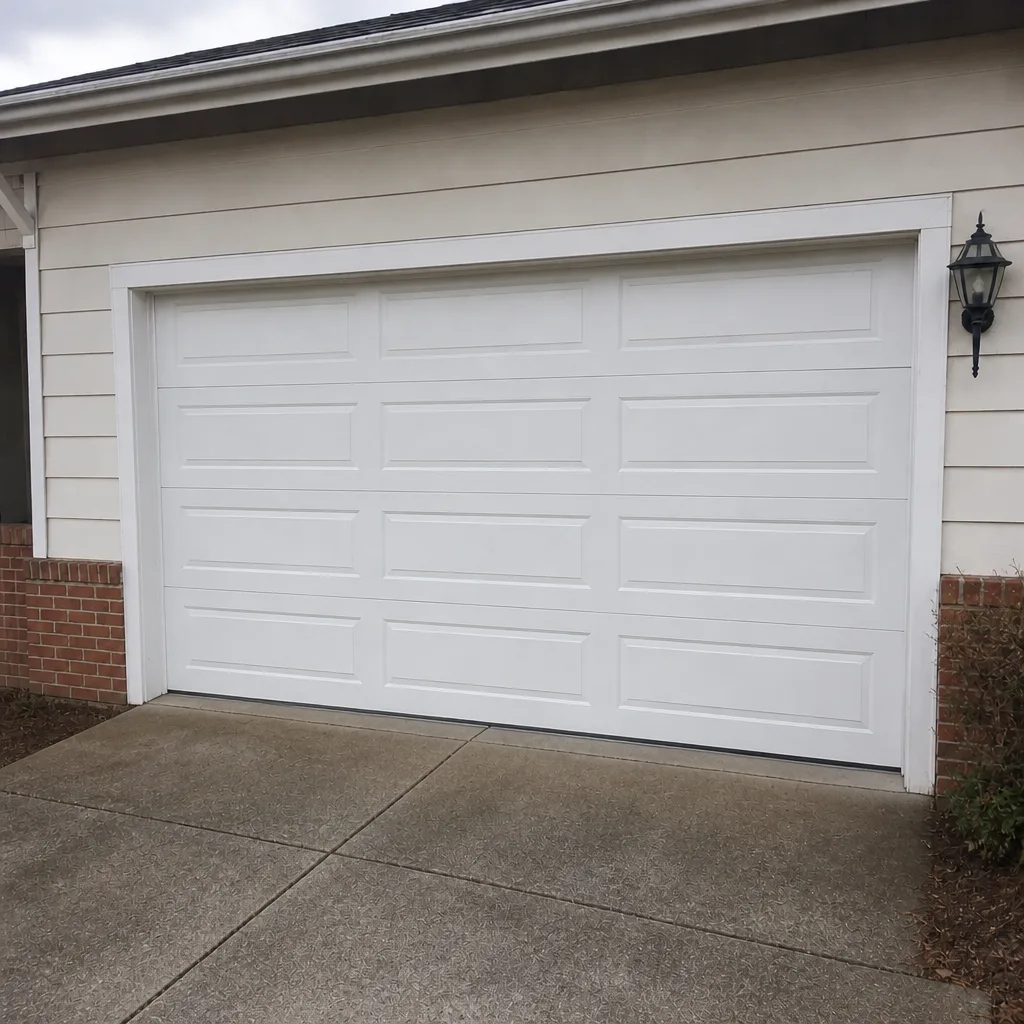 After
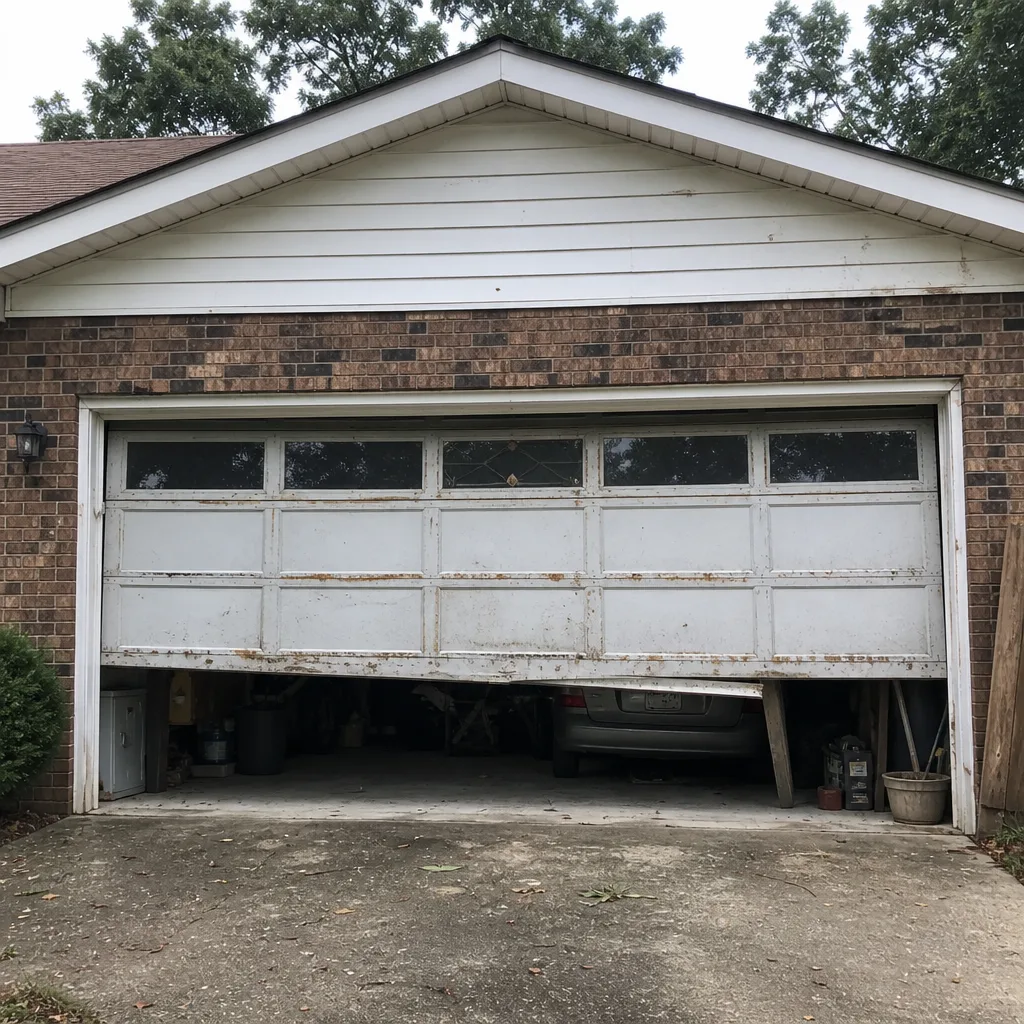 Before
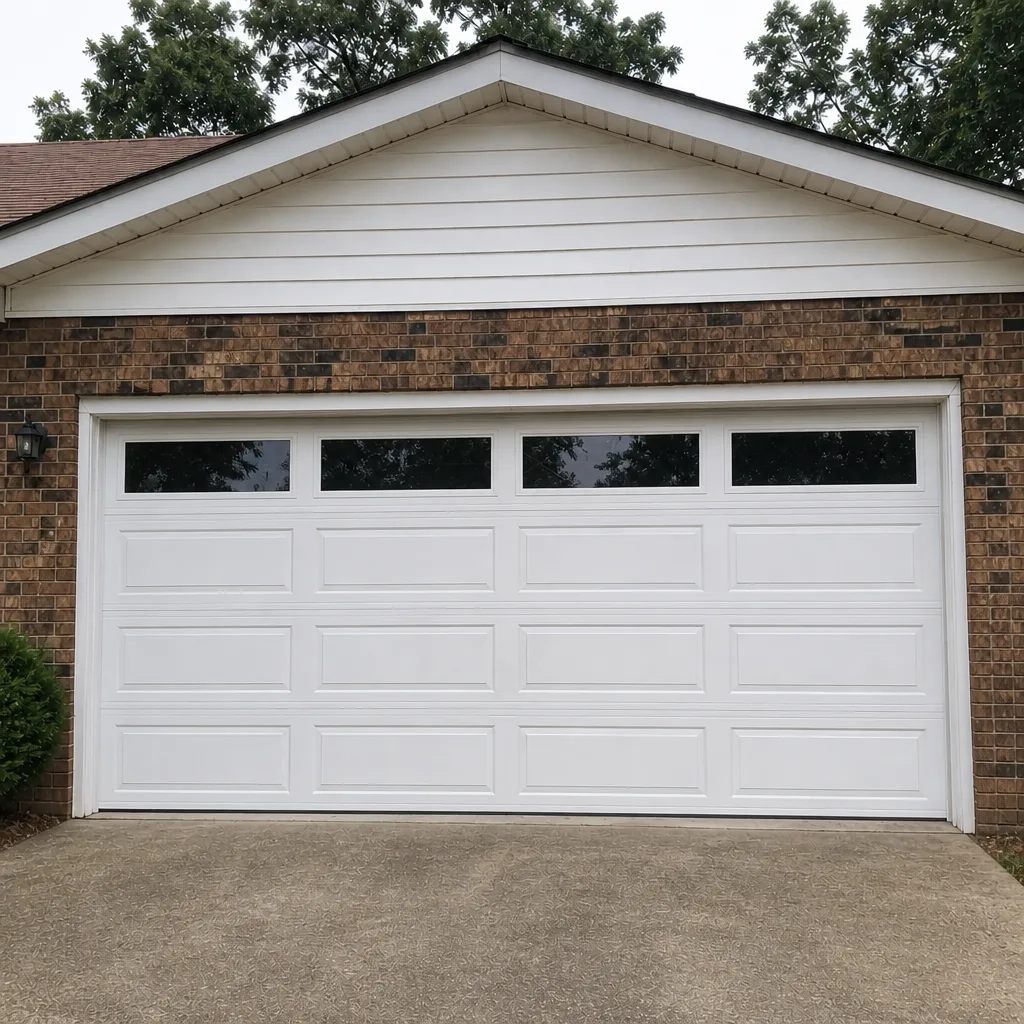 After
When to Call a Professional
Call for anything involving springs, cables or a damaged track – those are not safe to handle yourself, and the wrong move can cause serious injury. Call if the door won’t lift by hand after the seal is free, if the door has come off one track, if a panel is bent badly enough that the door won’t close flush, or if the opener runs but the door doesn’t move. For a locked or dead opener, a garage door opener repair visit is usually a same-day job. Tandem Garage Door Repair offers free estimates in Greensboro – call (855) 554-0021. We answer 24/7, and fast dispatch runs 7am to 7pm, Sunday through Friday. For a door that’s damaged past repair, we can also talk through a Greensboro replacement and what that involves.
Frequently Asked Questions
Close the door fully, pull the manual release cord down until the trolley disengages, then lift the door by hand. The procedure is the same on LiftMaster, Chamberlain and Genie openers, though the release cord position varies – on Genie units it’s often at an angle rather than straight down. Re-engage the trolley before restoring power. If the door won’t lift by hand, the springs may be the problem and you should call (855) 554-0021 for an exact diagnosis.
Free the bottom seal from the concrete before you run the opener. Break the bond along the full width of the seal with a tool that won’t gouge the rubber, then test the door by hand. Never run the opener against a frozen seal – the motor keeps pulling and can crack the track or strip the drive gear. Once the door moves freely, clear the ice from the track and the apron before running it.
No. Torsion springs are under enough tension to cause serious injury, and the cables can whip if the tension releases suddenly. If you see a gap in the spring coil or a loose cable, leave the door closed and call a technician. We handle spring work across all major brands – call (855) 554-0021 and we’ll book a repair visit.
Lower the door by hand if the springs are intact, or brace it with a wooden bar fitted between the inside face and the header if it can’t close. Don’t hammer a bent panel back into place and don’t run the opener against a jammed door – both turn a repair into a replacement. If the door can’t be secured safely, block the opening from inside and call us.
We quote per job by written estimate, and the price is agreed before any work starts, so there’s no surprise on the invoice. The estimate is free. Urgent work isn’t priced higher – the written quote is the price, whether you call on a Sunday or a Tuesday. Call (855) 554-0021 for an exact quote, and we’ll tell you what the repair involves before we book it.
Yes. We’re trained on LiftMaster, Chamberlain, Genie, Clopay, Amarr, Wayne Dalton, Craftsman and Raynor, so the technician works on the hardware that’s actually on your house, not a close approximation. That matters most in an emergency, when the right procedure for your system is the difference between a fixed door and a damaged one. Call (855) 554-0021 if you’re not sure which system you have.
The Bottom Line
Most garage door emergencies in Greensboro follow a pattern: ice bonds the seal to the floor, wind racks a panel, or the power goes out and the homeowner doesn’t know how the release works on their opener. Each of those has a specific, safe response, and none of them involve forcing the door or guessing at the hardware. Know your opener brand and model, keep a release procedure for your system where you can find it, free the seal before you run the motor, and stop cold at springs and cables. That’s the whole preparation. The rest – the actual repair – is what we’re here for. Call (855) 554-0021 for a free estimate. We answer 24/7. Fast dispatch from 7am to 7pm, Sunday through Friday.
Written by the team at Tandem Garage Door Repair.